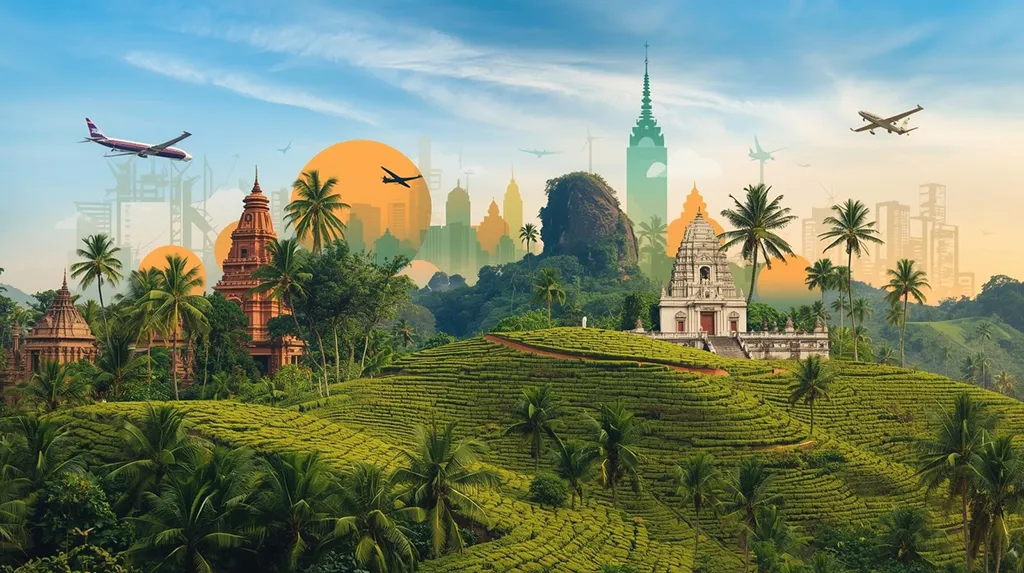
Tours in Sri Lanka: What’s Worth Booking?
Sri Lanka is a planner’s paradox. It looks small on a map—a teardrop off the coast of India that you could theoretically drive across in a day. Yet, anyone who has spent time on the island knows that “island distance” is measured in hours, not kilometers. The roads are winding, the buses are chaotic (albeit colorful), and the trains, while scenic, move at a pace that defies modern schedules.
This logistical reality is usually the moment travelers start looking at day tours. You’re based in Kandy but want to see Sigiriya. You’re in Ella and want to see elephants. The temptation is to book a packaged day trip to solve the transport puzzle.
But here is the truth: not every site in Sri Lanka requires a guide, and not every “tour” is worth the price tag. The tourism infrastructure here is heavily reliant on drivers and commission-based stops. If you aren’t careful, you might end up paying a premium for a car ride you could have booked on Uber, or standing in a “spice garden” being sold overpriced aloe vera cream when you thought you were booking a nature walk.
As someone who has planned countless itineraries across South Asia, I look at day tours through a specific lens: Does this add value, context, or access that I couldn’t get on my own? Sometimes the answer is a resounding yes. Other times, you are better off grabbing a tuk-tuk and wandering solo.
Here is a breakdown of which Sri Lanka day tours are worth your budget, and which ones you can safely skip.
Why Tours in Sri Lanka Are So Popular
To understand the tour market here, you have to understand the transport. Unlike Europe or parts of Southeast Asia, where point-to-point public transit is efficient, Sri Lanka relies heavily on hired drivers.
Taking a public bus from Colombo to Sigiriya is possible, but it involves multiple changes, heat, and unpredictable timing. Doing that, climbing the rock, and getting back in one day? That is an endurance sport, not a holiday.
Day tours in Sri Lanka generally fall into two categories:
- The Logistics Solver: You pay someone to drive you three hours to a site, wait for you, and drive you back. The value here is purely convenience.
- The Context Provider: You pay a specialist (naturalist, historian, local chef) to explain what you are seeing. The value here is education and access.
The mistake many first-time visitors make is confusing the two. They book a “Sigiriya Tour” expecting a historian, but get a driver who stays in the car while they climb the rock alone. Knowing the difference is key to managing your expectations and your wallet.
Day Tours That Actually Add Value
There are three specific experiences in Sri Lanka where I almost always recommend booking a guided tour or a specialized service. In these scenarios, the DIY approach often results in a distinctly inferior experience.
1. Wildlife Safaris (Yala, Udawalawe, Minneriya)
Wildlife safaris are among the most popular day trips. You can review official park guidelines and conservation updates via the Sri Lanka Department of Wildlife Conservation. You cannot walk into a Sri Lankan national park. You must be in a jeep and have a tracker. However, the quality of your safari depends entirely on the person behind the wheel.
A “tour” here isn’t just about entry tickets. It’s about the driver’s network and knowledge. In parks like Yala (famous for leopards) or Udawalawe (famous for elephants), the cheap, generic tours often utilize drivers who race toward any congregation of other jeeps. This results in the infamous “jeep jam,” where twenty engines roar around one stressed animal.
Why it’s worth booking a reputable operator:
A good naturalist guide understands animal behavior. They know to turn the engine off and wait by a waterhole rather than chasing tracks. They can spot a leopard in a tree from 200 meters away when you only see leaves.
- The Verdict: Do not skimp here. Book a game drive with a reputable company that prioritizes ethics and uses quiet vehicles. The difference between a $40 shared jeep and an $80 naturalist-led tour is between seeing a leopard’s tail and watching a leopard hunt.

2. The Cultural Triangle (Sigiriya & Polonnaruwa)
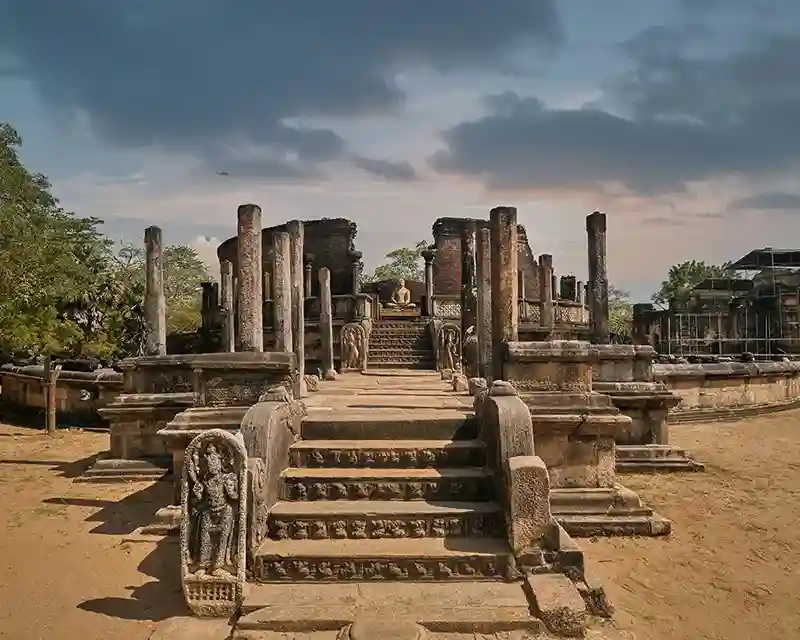
These ancient cities are UNESCO-listed heritage sites. You can verify World Heritage status and site details through the official UNESCO World Heritage Centre database. Sigiriya (Lion Rock) is visually impressive, but it is an archaeological site. Without context, you are climbing a very steep staircase to look at old brick foundations and a swimming pool.
The history of King Kashyapa, the engineering behind the hydraulic systems that still work today, and the stories hidden in the frescoes add a layer of depth that transforms the site. The same applies to the ancient city of Polonnaruwa. The ruins are sprawling and confusing without someone to map out the chronology for you.
Why it’s worth a guide:
While you can arrange transport yourself, hiring a licensed site guide at the entrance (or booking a tour that includes one) is highly recommended. They can navigate the crowds, show you the best photo angles away from the tourists, and explain the differences between the ruins.
- Pro Tip: If you book a day tour from Kandy or Colombo, ensure the package includes a licensed guide for the climb, not just a driver who drops you at the ticket counter.
3. Tea Factory Visits in Nuwara Eliya
Tea estates offer guided factory tours. For regional tourism updates and certified operators, consult the official Sri Lanka Tourism Development Authority (SLTDA). You can undoubtedly look at tea plantations from the train window—it is one of the most famous views in the world. However, the process of tea production is incredibly technical and fascinating.
Visiting a working factory involves understanding the drying, rolling, fermenting, and grading processes. While some factories allow walk-ins, a proper tour often includes a tasting session where you learn to distinguish between BOP (Broken Orange Pekoe) and Dust grades.
Why it’s worth it:
The logistics of the tea country are tricky. The factories are often kilometers apart, connected by winding roads. A day tour that takes you to a factory, a viewpoint like Lipton’s Seat, and a waterfall is a very efficient use of time in a region where transport is slow.

4. Colombo Street Food Tours
Colombo is often skipped by travelers who head straight for the beaches, but the capital’s food scene is electric. It is also intimidating. Pettah Market is a sensory overload of noise, crowds, and smells.
A guided food tour here is excellent because it bridges the gap between hygiene and comfort. A local guide knows which kottu stall is safe, which fruit vendor has the best mangosteen, and can navigate the chaotic streets of Pettah while you focus on eating. It turns a stressful environment into a culinary adventure.

Tours That Are Often Overpriced (or Traps)
Sri Lanka has a few “tourist trap” staples that often get bundled into day tours. If your itinerary includes these, check whether you can opt out.
The "Spice Garden"
If you book a day trip from Kandy to Dambulla, your driver will almost certainly ask if you want to stop at a spice garden. On paper, it sounds lovely—seeing how cinnamon and cardamom grow.
In reality, many of these (specifically the ones along the main tourist highways) are front operations for selling expensive herbal remedies. You will get a quick 10-minute tour of some plants, followed by a 30-minute high-pressure sales pitch for hair-removal creams or weight-loss oils. Unless you have a specific interest in botany and have vetted the garden as an authentic educational center, this is generally a waste of time.
Turtle Hatcheries
Along the southern coast, you will see dozens of turtle hatcheries. While some do conservation work, many are essentially zoos that keep turtles in small concrete tanks for tourists to hold, rather than releasing them into the ocean immediately.
Tours often sell this as an “eco-activity.” If you care about animal welfare, do deep research before visiting one. Seeing turtles in the wild while snorkeling in Hikkaduwa or Mirissa is a far more magical (and free) experience than paying to see them in a bucket.
Gem Museums
Similar to the spice gardens, these are often showrooms. Sri Lanka produces incredible sapphires, and the mining history is rich. However, “museum” stops on day tours are usually designed to get you into a jewelry showroom. If you aren’t in the market to buy a sapphire ring, you can skip this.
Private vs Shared Tours in Sri Lanka
When you decide a tour is necessary, you have to choose between a private driver/guide or a shared group van.
The Case for Private
In Sri Lanka, private tours are surprisingly affordable. If you are traveling as a couple or a family, hiring a private car and driver for the day is often cheaper than buying three or four tickets on a shared bus tour.
- Flexibility: You can leave at 6:00 AM to beat the heat on the way to Sigiriya. You can ask to stop for coconuts along the road. You can skip the spice garden.
- Comfort: Sri Lanka is hot. Having control over the AC and the music is a luxury that costs very little here.
The Case for Shared
If you are a solo traveler, private drivers can blow the budget. Shared tours (often booked via platforms like Viator or GetYourGuide) are great for meeting people and keeping costs down.
- Social Aspect: Good for backpackers wanting to trade tips.
- Predictable Cost: You know exactly what you are paying upfront, usually including entry fees, which simplifies budgeting.
When DIY Is Better
Save your money and your freedom for these locations. These are best explored at your own pace.
Galle Fort
You do not need a tour guide for Galle Fort. It is a small, walkable grid of streets filled with boutiques, cafes, and colonial architecture. Part of the charm is getting lost, grabbing a gelato, and walking the ramparts at sunset. A guide here often feels intrusive. Just read up on the history over breakfast and then explore.
The Kandy to Ella Train
You will see “tours” that sell this train ride. This usually means they buy the ticket for you (at a markup) and have a driver meet you at the other end with your bags.
While having someone transport your heavy luggage is nice, you don’t need a guide on the train. The experience is looking out the window. Buying tickets can be a hassle (they sell out fast), but using a ticket reseller agency is smarter than booking a complete “tour” for a train ride.
Ella Hiking (Little Adam's Peak & Nine Arch Bridge)
The trails in Ella are well-trodden. You can walk from Ella town to Little Adam’s Peak or the Nine Arch Bridge easily. You do not need to pay a guide to show you the way. The paths are safe, populated, and free.
Booking Timing Advice
One of the biggest questions I get is: “Should I book this now or wait until I arrive?”
Book in Advance:
- Yala Safaris: The park limits the number of jeeps, and the best naturalists fill up months in advance, especially for morning slots.
- Train Tickets: If you want a reserved seat (First or Second Class) on the Kandy-Ella route, these open 30 days prior and vanish instantly.
- Sigiriya/Lion Rock: Buying tickets online can save you from standing in a sweltering queue, though you still need to exchange the voucher sometimes.
Book on Arrival:
- Tuk-Tuk Day Trips: If you want to visit a waterfall or a nearby temple, negotiate with a tuk-tuk driver near your hotel. It directly supports the local micro-economy and lets you gauge the driver’s English level and temperament before committing.
- Whale Watching: Weather is a factor. It is better to check the sea conditions a day or two before booking rather than locking in months in advance.
Final Planner Verdict
Sri Lanka is a destination that rewards a mix of structure and spontaneity. If you try to structure every hour with a guided tour, you will miss the serendipity of the island—the conversation with a fruit seller, the unplanned stop for buffalo curd, the sunset that lasts longer than the itinerary allowed.
However, the “island chaos” is absolute. Use tours as tools to bypass logistics. Use them to access wildlife and history that requires expert interpretation. But for the towns, the beaches, and the hikes, trust your own feet.
If you are currently mapping out your route and wondering how to string these experiences together efficiently, looking at how others have balanced the drive times with the activities can be a huge help.
Planning a Sri Lanka trip? See which tours fit your route