Canon EOS R50 Review: Is It Good for Travel?
When you are packing for a trip to South Asia—whether it’s a quick week in Thailand or a three-month backpacking route through India and Nepal—space is your most valuable currency. Every ounce on your back matters when you’re sweating in 90% humidity or squeezing onto a crowded local bus.
For years, travelers have faced a dilemma: stick with a smartphone that struggles in low light and lacks zoom, or lug around a heavy DSLR that becomes a burden by day three.
Enter the Canon EOS R50. On paper, it is the perfect compromise. It’s tiny, lightweight, and relatively affordable. But specs don’t tell the whole story. A camera might look great in a YouTube studio, but how does it handle the dust of Rajasthan, the misty mornings in Sapa, or the chaotic street scenes of Dhaka?
This isn’t a technical review full of charts and pixel-peeping. This is a look at whether the R50 is actually worth the space in your backpack.
Why Travelers Consider the R50
Most of us aren’t professional photographers. We are travelers who want better memories than what our phones can capture. You might be considering the R50 because you’ve hit the limits of your smartphone. Maybe you tried to zoom in on a monkey in a tree in Bali and got a blurry mess, or you tried to capture the lantern festival in Chiang Mai and just got black grain.
Canon EOS R50 is a compact mirrorless camera designed for beginners and travel creators. The R50 sits in a sweet spot. It is an “APS-C” mirrorless camera. In simple terms, this means it has a much larger sensor than your phone, which allows for better light capture and that nice blurry background (bokeh) everyone loves in portraits, but it’s smaller than the massive “Full Frame” cameras pros use.
For a traveler in South Asia, the appeal is obvious:
- Stealth: It doesn’t look “pro.” This is actually a huge benefit. Pulling out a giant camera in a Mumbai market can immediately change the dynamic. People pose, stiffen up, or ask for money. The R50 is small enough to be unobtrusive.
- Price: It leaves you with a budget leftover for flights and experiences.
- Connectivity: It connects to your phone easily, so you can still post to Instagram Stories during your layover.
But is it robust enough for the road? Let’s break it down by the factors that actually matter when you are away from home.
Weight, Battery & The Reality of Carrying It
The Weight Factor
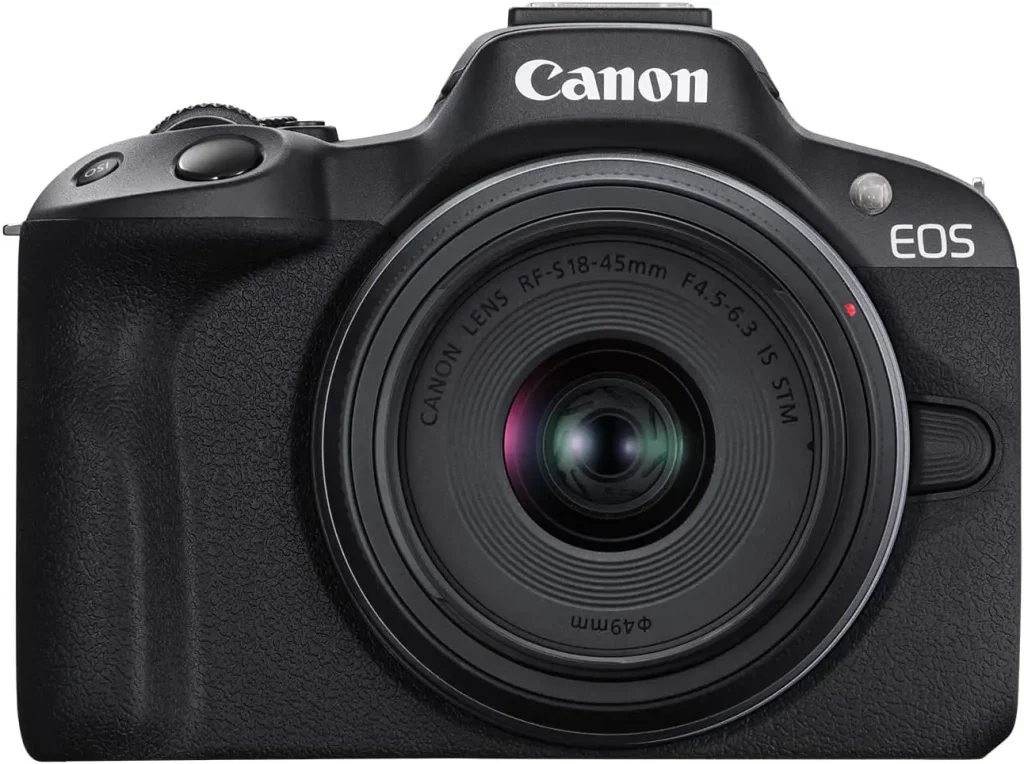
The body of the Canon R50 weighs roughly 375 grams (about 0.8 lbs). To put that in perspective, that is lighter than a standard bottle of water. When you pair it with the “kit lens” (the 18-45mm lens it usually comes with), it is barely noticeable around your neck.
In the humid heat of Sri Lanka or Vietnam, heavy gear is miserable. A heavy strap digs into your neck, causes sweat patches, and makes you tired faster. With the R50, you can genuinely hike up to the Tiger’s Nest Monastery in Bhutan or climb the steps at Batu Caves in Malaysia without feeling like you are hauling a brick. You can keep it around your neck all day, ready to shoot, rather than burying it in your bag because your shoulder hurts.
The Grip Issue
However, there is a trade-off for this size. If you have large hands, the R50 might feel too small. The grip is shallow. In high-humidity environments where your hands are sweaty, it can feel a little slippery. I recommend buying a cheap wrist strap rather than relying solely on the neck strap. It gives you more security if it slips.
Battery Life: The Traveler's Anxiety
Here is the truth: the battery life is mediocre.
Canon rates it at around 370-440 shots. In real-world travel terms, this means if you are vlogging a bit, snapping photos of your breakfast, shooting street scenes all morning, and reviewing your photos on the back screen, the battery will likely die by 2:00 PM.
If you are trekking in the Annapurna Circuit, where charging points are scarce, this is a problem. The R50 uses the LP-E17 battery, which is relatively small.
The Solution: You absolutely need a spare battery. Do not travel with just one. Alternatively, the camera supports USB-C charging. This is a lifesaver. You can plug it into the same power bank you use for your phone while you are eating lunch or sitting on a train. Just make sure your power bank has “Power Delivery” (PD) capability, or it might not charge effectively.
Photo & Video for Travel Use
Capturing the Colors of South Asia
South Asia is vibrant—the spices in the markets, the painted trucks in Pakistan, the turquoise waters of the Maldives. Canon’s “color science” (how it processes colors) is excellent for this.
Out of the box, JPEGs look great. Skin tones look natural, which is excellent for travel portraits, and the colors punch without looking fake. If you don’t want to spend hours editing photos on a laptop (and let’s be honest, who wants to do that when there is a beach nearby?), the R50 is fantastic.
The autofocus is the real star here. It inherits technology from Canon’s much more expensive cameras. If you are trying to take a photo of a moving subject—like a dancer in Kandy or a rickshaw zipping by in Hanoi—the camera locks onto eyes and faces incredibly fast. For a travel photographer who needs to capture split-second moments, this reliability is worth more than megapixels.
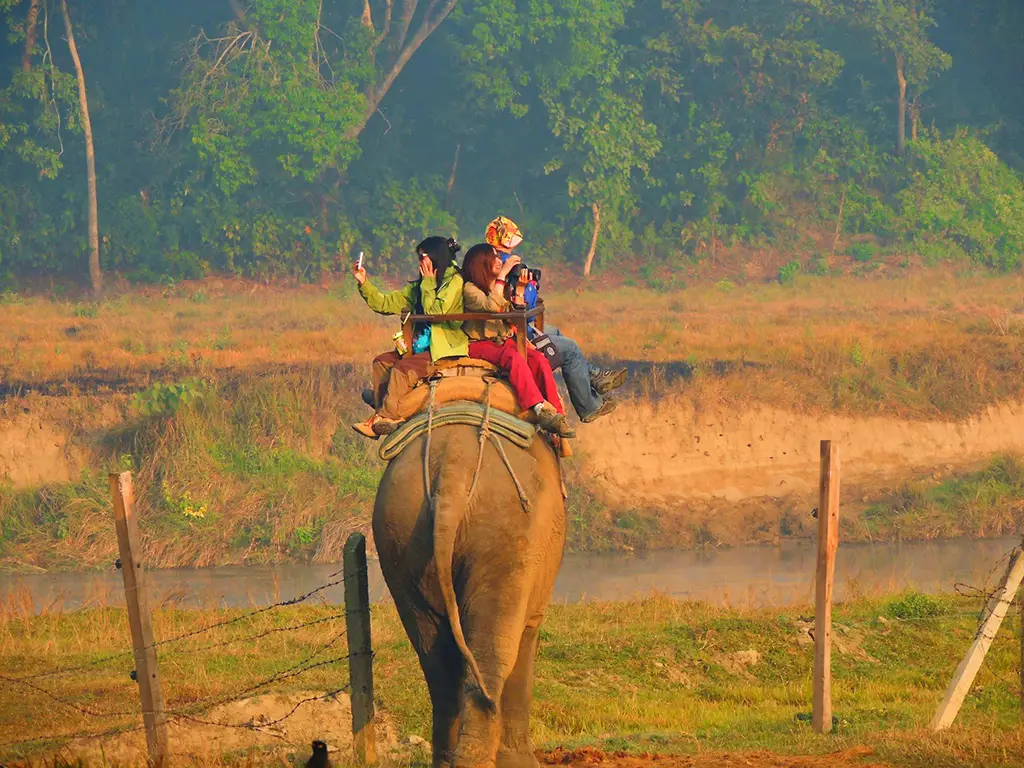
Canon EOS R50 review Low Light Performance
This is usually why people upgrade from phones. The R50 is decent in low light, but not magical.
If you are at a night market in Taiwan, it will do a good job. If you are trying to photograph the stars in Ladakh, you will struggle without a tripod and a better lens. The “kit lens” (18-45mm) has a narrow aperture (f/6.3 at the wide end), which means it doesn’t let in much light.
If you buy this camera for travel, I strongly suggest buying one additional lens: the RF 50mm f/1.8 (often called the “nifty fifty”). It is cheap, small, and lets in way more light. It’s the secret weapon for those blurry-background night shots.

Vlogging and Video
For the TikTok and Reels generation, the R50 is a powerhouse.
- Vertical Video: It knows when you are shooting vertically and saves the file that way, so you don’t have to rotate it in editing.
- Product Showcase: If you are a travel influencer showcasing a specific dish or souvenir, the autofocus prioritizes items held close to the lens.
- Crop: There is a slight “crop” when using electronic stabilization. This means the camera zooms in a bit to steady the footage. If you are vlogging at arm’s length, your face might fill the whole frame. You’ll need to extend your arm or get a fully extended small tripod stick.
The 4K video is sharp (downsampled from 6K) and doesn’t overheat quickly, which is crucial in tropical climates.
What It's Not Good At
To keep this honest, we have to talk about the limitations.
1. Weather Sealing (Or Lack Thereof)
The Canon R50 is not weather-sealed.
This is a significant consideration for South Asia. Monsoon season brings sudden, torrential downpours. Dust in Rajasthan or Bagan is fine like powder. The R50 has plenty of entry points for water and dust.
If you get caught in a rainstorm in Kerala, you need to put this camera away immediately. It cannot handle soaking. If you are planning a trip that involves harsh environments—like a dusty desert safari or a boat trip with lots of spray—you need to be very careful. You will need a good “dry bag” or a protective camera case.
2. The Lens Ecosystem (Budget Warning)
The camera body is cheap. The lenses… Well, it isn’t very easy.
Canon’s “RF-S” lens selection (lenses designed specifically for this sensor size) is still small. Canon’s current RF-S lens lineup is still growing, which may limit affordable native lens choices for budget travelers. You can use the expensive full-frame “RF” lenses, but they are heavy and costly. You can use older DSLR lenses with an adapter, but that adds bulk.
If you want a “do-it-all” travel lens (like an 18-150mm that lets you zoom in on distant mountains), it will cost you nearly as much as the camera itself.
3. Single Card Slot
The R50 only holds one SD card. If that card corrupts, you lose your photos. Pro cameras have two backup slots. For most travelers, this is a calculated risk, but it means you should buy high-quality SD cards (don’t cheap out here) and back up your photos to your phone or cloud storage every night at the hotel.
Who Should Buy It (And Who Shouldn't)
So, is the Canon R50 the right travel companion for your next adventure?
Buy it if:
- You are a “Phone-Plus” Traveler: You want better quality than your iPhone, specifically for zoom, low light, and natural bokeh, but you don’t want to learn complex manual settings immediately.
- You Pack Light: You are traveling with a carry-on only and can’t justify a heavy DSLR.
- You do Hybrid Content: You shoot 50% video (Reels/TikTok) and 50% photos for Instagram.
- You are on a Budget: You want a modern camera system under $800 so you can spend your money on experiences.
Skip it if:
- You are an Adventure junkie: If you are kayaking, trekking in monsoons, or going into extreme dust, the lack of weather sealing is a risk. Look at a GoPro or a used, weather-sealed DSLR like the Pentax or high-end Olympus.
- You need huge prints: If you plan to print your photos on massive canvases, you might want a higher-resolution sensor, though 24MP is plenty for A3 prints.
- You hate touchscreens: The R50 relies heavily on the touchscreen interface. If you prefer physical dials and buttons for every setting, this might annoy you.
The Verdict for the South Asia Trip
The Canon EOS R50 is a fantastic little travel buddy. It captures the chaos, color, and vibrancy of destinations like India, Thailand, and Vietnam beautifully without weighing you down.
It removes the barrier between “seeing” and “capturing.” Because it is light, you will actually take it out of your bag. Because the autofocus is good, you will actually get the shot. And really, that is all a travel camera needs to do.
Just remember: buy a spare battery, a wrist strap, and keep it dry when the monsoon hits.
Ready to Plan Your Shot?
Now that you know what gear to bring, it’s time to figure out where to point that lens. Whether you are chasing the sunrise over Angkor Wat or the blue city of Jodhpur, getting the gear is just step one.
If you are looking for an itinerary that gives you enough time to actually take photos—rather than rushing from bus to bus—we can help. We specialize in building flexible, culture-focused trips across Asia that let you explore at your own pace.