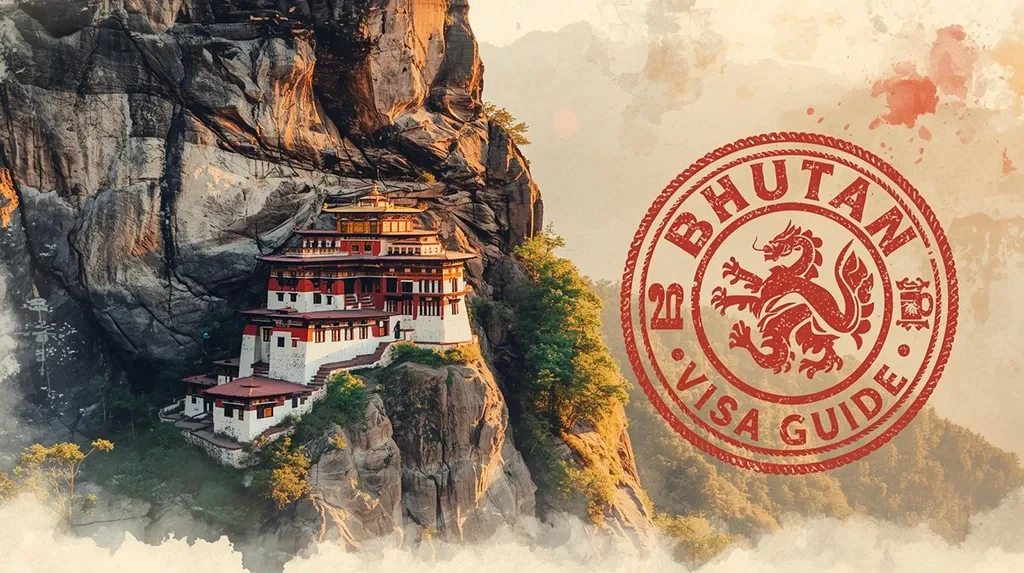
Bhutan Monastery: A Peaceful Travel Story
All who venture into Bhutan come home with more than just a photo souvenir. They return with tales of prayer flags dancing on alpine breezes, monks inviting strangers in for warm butter tea, and of valleys so hushed you can hear your own breath.
Not glossy magazine stories or curated social media feeds. They’re actual stories told by real people who went to the Land of Happiness and discovered something unexpected. This nation does not measure the success of its people in dollars, and we cannot afford to define freedom in terms of material possessions; neither can wealth define life.
Here at TripxAsia, we’ve collated real traveler tales from those who have trailed on Bhutan’s secret paths, meditated in ancient monasteries, and danced with locals during the lively festivals. Their experiences show what guidebooks often fail to convey: the deep and fundamental way that Bhutan changes how you perceive the world — perhaps, more importantly, yourself.
Whether you’re preparing for your first visit or just dreaming from afar, these stories offer insight into what makes this small Himalayan kingdom so inspiring to travelers from around the world.
Why So Many Travelers Love Bhutan
Bhutan stands out as a captivating exception in a world consumed by the idea of limitless growth. You have to question why we value Gross National Happiness (GNH) more than Gross Domestic Product (GDP). This small kingdom is located between India and China. It has a rich Buddhist heritage and is developing in modern ways. Remarkably, up to 72% of its land is covered by forests. The tourism plan focuses on encouraging meaningful interactions instead of large groups of tourists. A portion of your daily bed-night fee directly supports local projects, helping local people benefit from tourism. The National Tourism Sustainable Development fee (SDF) is $100 USD per night. This fee helps control the number of visitors to protected areas.
For a lucky few, Bhutan is one of the few places in the world where you can shut out all that digital noise and get back to what really matters. The beauty of the landscape encourages mindfulness—hiking through rhododendron forests, witnessing clouds embrace mountain summits, or observing monks’ evening prayers. As one visitor wrote, “Bhutan makes you think differently about what life is all about. It is not a luxury, but peace.” There is some truth in this; Bhutan does more than look —it transforms you, makes you something else for a while, and that is often unsettling.
Bhutan Monastery Stories from Real Travelers
Story 1: Trekking to Tiger’s Nest
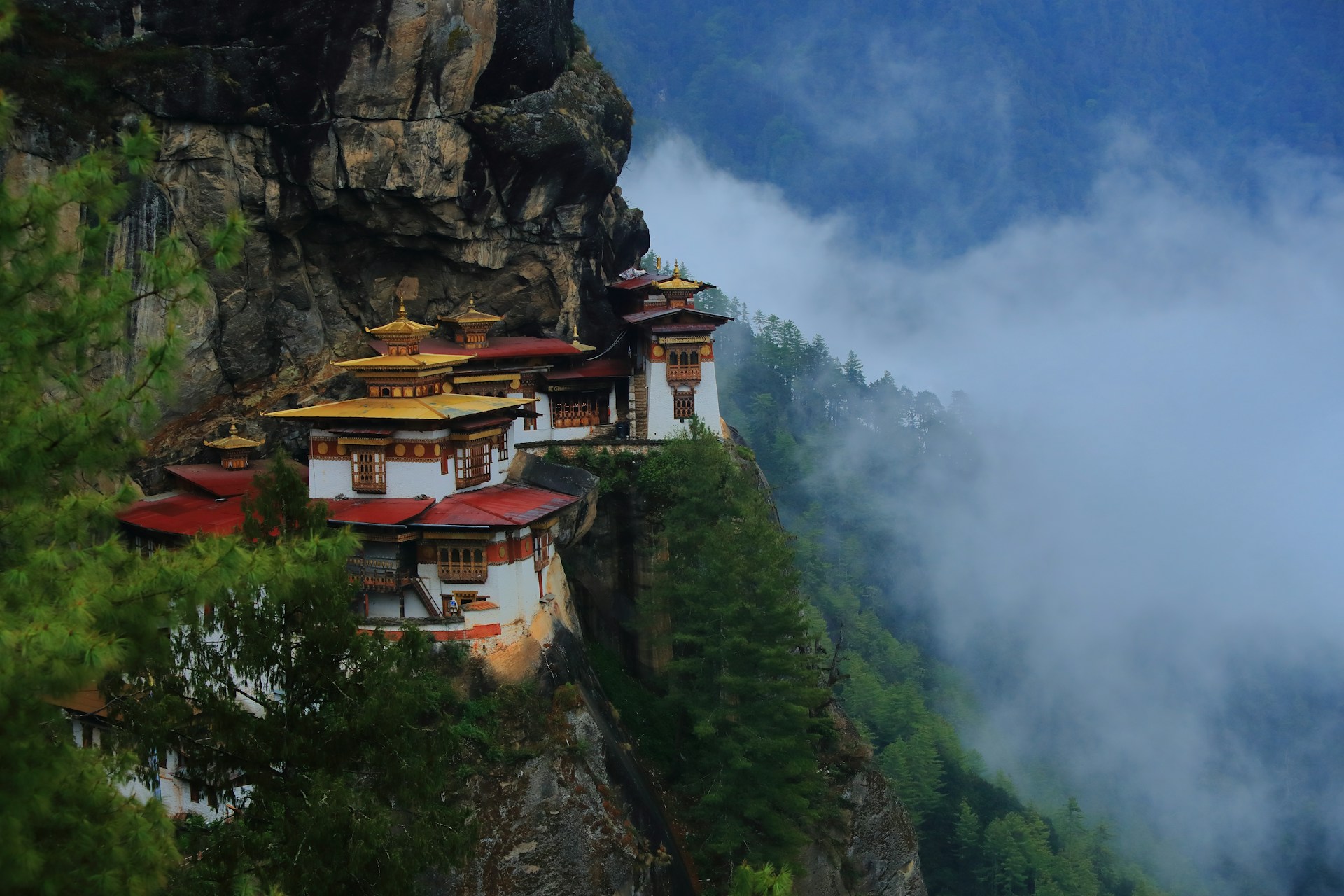
Sarah, a marketing executive from California, had hiked many trails before. However, the path to Bhutan’s Tiger’s Nest Monastery was different from her past experiences. The trek started at 7,400 feet and climbed steeply through pine forests. The monastery appeared and disappeared behind the trees as she moved. About halfway through, a small tea house served butter tea and momos, giving trekkers a much-needed break before the most challenging part of the climb.
“The final section was the most difficult,” Sarah said. “Not from the climb up but because I couldn’t take my eyes off it. “How did they lay this place on a cliff in 1692?”
Sarah arrived at the monastery after a long journey that included crossing a chasm, passing a waterfall, and climbing stone steps on the cliff. After four hours, she could hear the chanting of the monks echoing through the colorful halls. Standing on a platform that jutted out over the Paro Valley, she felt the wind pulling at the prayer flags more than anywhere else in Bhutan. Suddenly, she felt something change in her.
“I understood that the climb was not only physical,” she said. “I had arrived for something deeper, like so many generations of pilgrims before me.”
The descent had weakened her legs, but she felt lighter. That night, she recorded in her journal: “Today I climbed to a monastery. I came down transformed.” In that moment, she sensed something changing within herself.
“I realized the climb wasn’t just physical,” she said. “It was about seeking something deeper, like generations of pilgrims before me.”
The descent left her legs shaky, but she felt lighter. That evening, she wrote in her journal: “Today I climbed to a monastery. I came down transformed.”

Story 2: Meeting Monks in Punakha
James is a retired teacher from Australia. He was not looking for friends during his photography trip in Bhutan. At the impressive Punakha Dzong, he met Tenzin, a young monk who spoke English. What started as a request for photography tips turned into a deep three-hour conversation about life, spirituality, and tradition.
Tenzin asked, “Why do you travel so much if you love your home?” This question made James confront the sadness he had hidden since his wife’s death. Tenzin listened carefully and said, “Your sadness is a tribute to your love. Don’t rush away from it.” This approval to feel his emotions helped him heal from more than two years of constant travel.
James joined the monks for their morning prayers. He sat with them as they chanted mantras. He didn’t understand the words, but he felt their shared devotion. He stayed there, talking and being silent with Tenzin.
Before leaving, Tenzin gave James a prayer flag. He said, “Remember, everything is connected.” Now, that flag flies in James’s garden in Melbourne. It reminds him that the true value of travel is not just about seeing new places but also about understanding himself through others.

Story 3: Colors Of Paro Tsechu, Colors and Experiences
Maria and her teenage daughter, Elena, often struggled to communicate. Their trip to Bhutan could help them reconnect, but Maria worried that spending two weeks together might make things worse.
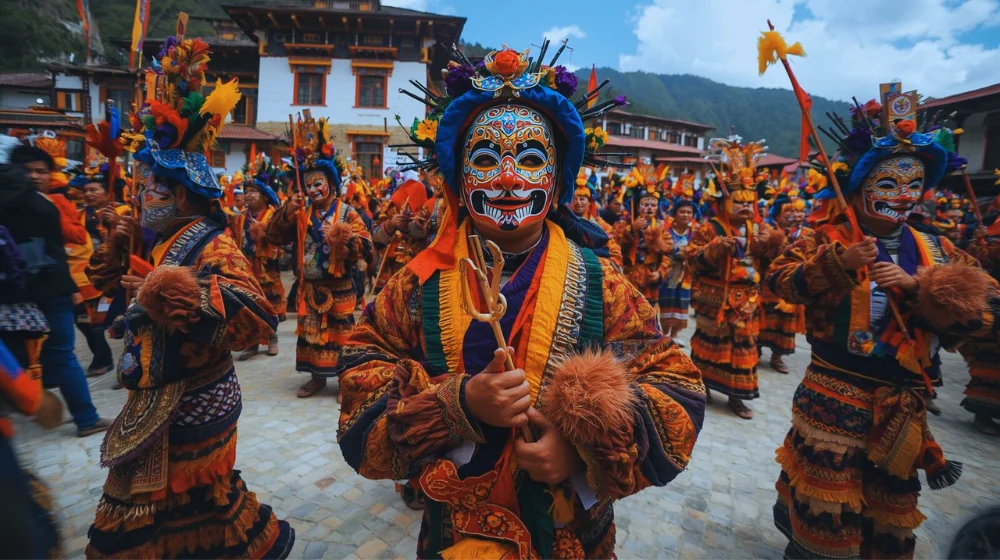
Next, they attended the Paro Tsechu, one of Bhutan’s most lively festivals. The grounds were full of color with ornate costumes, traditional dances, and large thangkas. Families enjoyed picnics while children played, all dressed in their best traditional attire. Elena, usually focused on her phone, was captivated and pulled Maria through the crowds, excitedly pointing things out. Maria felt a strong sense of community—everyone, no matter where they were from, celebrated together.
On the third day, thousands gathered to watch the ceremonial unfurling of the giant thangkas, or sacred tapestry. As the huge silk painting began to lift and unroll, Maria felt swept away by the crowd. Elena held her hand tightly, feeling a rush of joy. She shed “happy tears” as she realized how meaningful this moment was for her.
This breakthrough became a defining transformation of their trip. Back home, Elena cherished a photo from the festival, a powerful symbol of their deepening bond and their shared commitment to being “on the same side.”?
Story 4: Finding Silence in Gangtey Valley
Marcus is a developer from London who often feels overwhelmed by constant notifications. He discovered the idea of taking breaks from social media after reading a self-improvement book. Now, he regularly deletes his account for two to nine months at a time. He had forgotten what true silence was like until he visited Gangtey Valley in central Bhutan.
This remote valley is home to rare black-necked cranes and few people. He arrived at a simple farmhouse where the family spoke little English. That first night, the silence was so deep he wondered if something was wrong with his ears. Within a few days, he got used to the family’s routine, helped with chores, and fell in love with the beautiful scenery.
At first, he felt overwhelmed because he was used to constant entertainment. He felt anxious and restless. One afternoon, the grandmother of the family noticed he was upset and sat with him to teach him deep, slow breathing. This simple exercise helped calm him down, and he began to appreciate the silence. By the time he left, he no longer saw silence as a danger; he saw it as something nourishing.
Back home in London, Marcus transformed his life by introducing “silence hours” and deleting social media. He discovered the power of productivity without the chaos of busyness. By embracing stillness, he found deep peace —a tranquility that persists within the energy of this vibrant city.

What Travellers Learned from Bhutan
While these stories are all different, they share some similarities. What you learn in Bhutan’s mountains and monasteries is often more valuable than what you actually see.
Slow travel creates more profound experiences. While much of the world focuses on efficiency and living quickly, Bhutan offers a different perspective: it’s better to go deep rather than wide. Sarah’s four-hour hike to Tiger’s Nest changed her life in a way that a quick helicopter ride would not have. James formed a meaningful friendship with Tenzin because he allowed time for unexpected moments. Rushing through Bhutan misses the point, as the country reminds us that the journey matters just as much as the destination.
Simplicity doesn’t mean sacrifice. Western culture often connects happiness to having more possessions, experiences, and achievements. This idea is challenged by Bhutan’s focus on Gross National Happiness. Many travellers describe their most meaningful moments in simple settings, like drinking butter tea with monks, sharing meals with homestay families, or seeing prayer flags flying in the mountains. These experiences cost little money but provide great spiritual and emotional rewards.
Cultural respect opens doors. The tourism model in Bhutan works because it attracts tourists who want to learn about the culture rather than consume it. Maria and Elena had a meaningful experience at the festival because they were curious and respectful. Marcus’s time in Gangtey Valley became special because he was part of a family life, not separate from it. When tourists respect local customs, dress appropriately in religious sites, and approach cultural differences with humility, locals welcome them warmly and openly.
Disconnecting allows reconnecting. Travellers spoke about the release from their usual reliance on technology. In Bhutan’s remote valleys and mountain monasteries, Wi-Fi is spotty and phone signals are rare. At first, this disconnection can be frustrating, but it ends up feeling freeing. Without digital distractions, travellers noticed details they would usually miss. They had meaningful conversations and, most importantly, they learned to listen to their own thoughts for the first time in years.
Nature restores what modern life depletes. Modern life takes away the natural rhythm that nature offers us. Bhutan’s clean environment — its untouched forests, clear rivers, and unpolluted skies — shows us what we lose in developed countries. Travellers say they can finally take deep breaths, sleep well in the fresh mountain air, and feel relaxed among ancient trees. This is partly due to Bhutan’s rule to keep at least 60% of its land as forest. It also highlights the idea that we need wild places to feel fully human.
How to Visit a Bhutan Monastery: Travel Tips
Ready to plan your own Bhutan story? Here’s what you need to know:
Best Time to Visit
Spring, from March to May, is when Rhododendrons bloom, the mountains are clear, and temperatures are cool. This season also includes important festivals in Bhutan, like Paro Tsechu.
Fall, from September to November, is the best time for trekking and taking photos. During the harvest season, golden rice fields cover the valley walls. In late October, black-necked cranes arrive in Gangtey Valley.
Winter lasts from December to February. During this time, daily fees are lower, but temperatures are cold. Higher mountain passes can be covered in snow, and many areas of the region are only reachable in late spring and summer.
In the summer, heavy rainfall occurs during the monsoon, especially in the south. The high valleys receive less rain, making them lush and green. Fewer tourists mean more chances for intimate cultural experiences.
Visa and Entry Requirements
All international tourists (except for Indian, Bangladeshi, and Maldivian citizens) must get a visa before arriving in Bhutan. You can apply for the visa through the official government website. This site also helps you manage the Sustainable Development Fee (SDF).
As of September 2023, Bhutan charges a Sustainable Development Fee of $100 per person per night. This fee is handled through the immi.gov.bt website. It replaces the previous daily tariff system and supports visa processing, government royalties, and infrastructure development. Children under 6 are exempt from this fee, while those aged 6-12 pay $50 per night.
Make sure your passport is valid for at least six months after your planned departure date. You can enter Bhutan through Paro Airport or by land from India at Phuentsholing, Gelephu, and Samdrup Jongkhar.
Recommended Itinerary
For first-time visitors, a 7-10 day itinerary offers a solid introduction:
- Days 1-2: Paro Valley – Acclimatise, explore Paro Dzong, visit the National Museum, stroll through town.
- Day 3: Tiger’s Nest Trek – Allow a full day for this iconic hike.
- Days 4-5: Thimphu – Bhutan’s capital offers the Buddha Dordenma statue, Memorial Chorten, craft markets, and weekend market (if you’re there Saturday/Sunday).
- Days 6-7: Punakha Valley – Visit Punakha Dzong, hike to Chimi Lhakhang (the fertility temple), explore Khamsum Yulley Namgyal Chorten.
- Day 8: Return to Paro – Buffer day for weather delays or last-minute shopping.
If you have more time, add:
- Gangtey Valley (2-3 days) for nature and crane watching
- Bumthang Valley (2-3 days) for ancient temples and spiritual sites
- Haa Valley (1-2 days) for a less-visited western region
Budget and Transport
Beyond the Sustainable Development Fee, expect to pay for:
- International flights to/from Paro (typically $300-800 depending on origin)
- Tour operator services: $200-400 per day, including accommodation, meals, guide, and transport
- Personal expenses: souvenirs, alcohol (not included in packages), tips
The total cost for a week in Bhutan typically ranges from $2,500 to $ 4,000 per person, depending on the accommodation level and group size. Couples or groups can negotiate better rates as costs are per group, not per person.
All tourist transport happens through your tour operator. You’ll travel by private vehicle with a licensed driver. Domestic flights between Paro and Bumthang are available but weather-dependent.
Your Story Awaits in the Land of Happiness
These travellers left home looking for adventure, culture, or a break from their daily lives. In Bhutan, they discovered something deeper: a place that encourages them to slow down, pay attention, and think about what really matters.
Your experiences in Bhutan will be uniquely yours. Sarah’s journey is different from yours, just as James’s, Maria’s, and Marcus’s experiences are distinct. The mountains you climb, the monks you meet, and the festivals you attend will be your own. Like many travellers before you, you’ll likely return home changed in ways you can’t yet imagine.
Bhutan does not offer luxury or comfort. Instead, it gives you a chance to experience a unique culture that values happiness over material goods, community over individual pursuits, and preservation over profit. Whether you visit Bhutan for spiritual growth, cultural experiences, or the allure of untouched mountains, the country is ready to share its insights with you.
The prayer flags are already flapping in the mountain breeze. The monks are singing evening prayers. And the valleys look just as stunning today, maybe even more than before.
Your story is waiting. Will you answer the call?