Best Credit Card for Couples in South Asia
You’ve booked the flight, planned the itinerary, and packed your bags. You are ready for the sensory explosion that is South Asia. But as you stand in the queue at a bustling market in Delhi or a tea house in Colombo, a practical question hits you: How am I actually going to pay for this?
It is a common source of anxiety for first-time travelers to the region. Rely too heavily on plastic, and you might find yourself stranded at a remote train station with no way to buy a ticket. Bring too much cash, and you worry about safety.
The reality of using credit cards in South Asia—specifically India, Nepal, Sri Lanka, and the Maldives—is nuanced. It isn’t a simple “yes” or “no.” It is a “yes, but…”
This guide cuts through the myths. We will look at where your card will work flawlessly, where it will likely be rejected, and the payment strategy you need to navigate your trip without a hitch.
The Short Answer: The Hybrid Approach
If you are hoping to go entirely cashless, as you might in London or Singapore, you need to adjust your expectations. While digital adoption in South Asia has skyrocketed in the last five years, the infrastructure for international credit cards hasn’t reached every street corner yet.
For the typical traveler on a mid-range budget ($500–$1500 per trip), the split usually looks like this:
- Credit Cards: 40% of expenses (Hotels, flights, high-end meals).
- Cash: 60% of costs (Transport, entry fees, street food, markets, daily spending).
Let’s break down exactly where you can swipe and where you need to reach for your wallet.
Where Credit Cards Work: The "Tourist Bubble"
In major metropolitan hubs and tourist centers, you can generally rely on your Visa or Mastercard. If you are staying within the “tourist bubble,” payment is seamless.
1. Accommodation
Whether you are booking a boutique heritage hotel in Jaipur or a 4-star beach resort in Galle, credit cards are standard.
- The Reality: Most mid-range to luxury hotels accept cards. However, if you are staying in small guesthouses, homestays, or hostels in remote areas (such as trekking lodges in the Himalayas), they often lack card machines or the internet connection needed to process the transaction.
- Pro Tip: Always check the “Payment Methods” section on your booking platform. If it says “Pay at Property,” message them ahead of time to confirm their machine is working.

2. Upscale Dining and Retail
Restaurants that have air conditioning, printed menus, and a door usually accept cards. Similarly, established shops selling carpets, jewelry, or branded clothing in major malls will take plastic.
- The Reality: You might encounter a minimum spend limit. A cafe might not let you charge $2 for a coffee, but they will happily process a $20 lunch.
3. Online Travel Services
This is where your card is most useful.
- Ride-Hailing: Apps like Uber (India) and PickMe (Sri Lanka) allow you to link your credit card. This is a massive convenience, saving you from haggling over cash prices with tuk-tuk drivers.
- Domestic Flights: Booking internal flights with local airlines is almost always done online with a credit card.
Where Credit Cards Fail: The Real South Asia
The charm of South Asia lies in its chaos, its street life, and its informal economy. In these spaces, cash is the only language spoken.
1. Local Transport
While Uber is available in cities, much of your travel will be in autorickshaws, tuk-tuks, local buses, and trains bought at the counter.
- The Scenario: You just finished a tour of the Taj Mahal. You need a rickshaw back to your hotel. The driver will not have a card machine. He might have a QR code on his dashboard, but that is likely for a local digital wallet (like UPI in India) that requires a local bank account, not your international Visa card.
2. Street Food and Markets
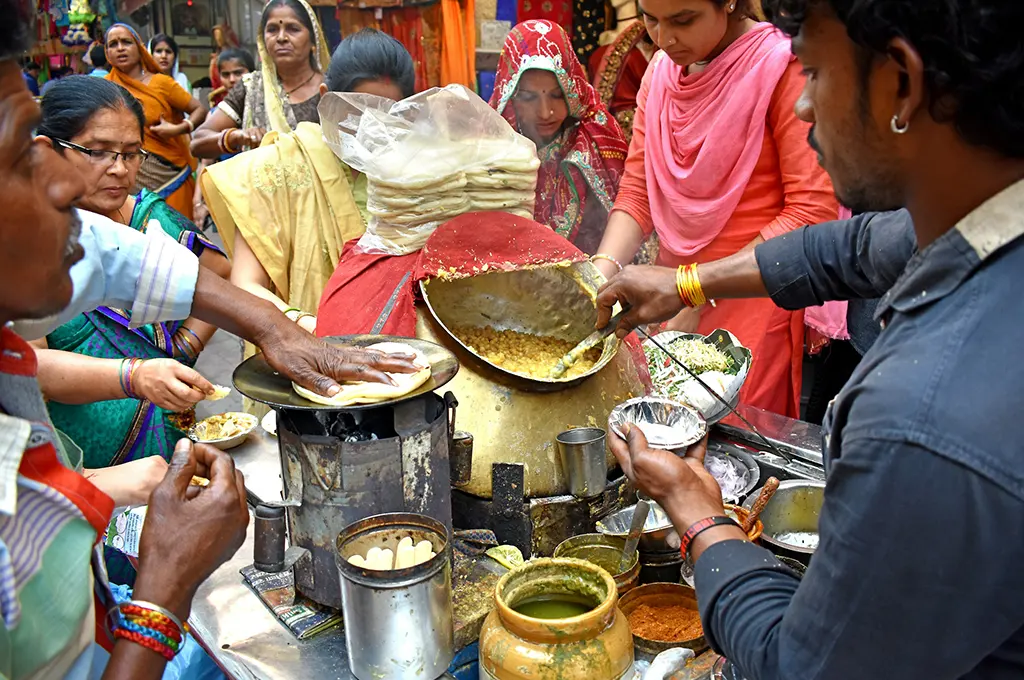
You cannot visit South Asia without trying the street food. Whether it’s momos in Nepal or kottu roti in Sri Lanka, these vendors operate strictly on cash. The same goes for buying souvenirs at flea markets. Even if a vendor claims to take cards, the machine often “conveniently” breaks during bargaining, forcing you to pay cash.
3. Cultural Sites and Entry Fees
This is a mixed bag. Major UNESCO sites often have card machines at ticket counters. However, smaller temples, museums, and parks usually do not.
- The Scenario: You arrive at a beautiful, off-the-beaten-path temple. The entry fee is small—perhaps $3. They won’t process a card for that amount, and if you don’t have small bills, you might miss out.

4. The Surcharge Surprise
In Nepal and parts of Sri Lanka, it is common practice for merchants to pass the bank transaction fee onto you.
- The Reality: You go to pay your bill at a souvenir shop in Kathmandu. The merchant says, “Card is okay, but 3.5% extra.” On a large purchase, that adds up. Always ask, “Is there a surcharge for credit cards?” before you hand yours over.
The Tech Troubles: Why Cards Get Declined
Sometimes, the merchant accepts cards, but yours simply won’t work. This is rarely a lack of funds and usually a technical hurdle.
Two-Factor Authentication (2FA) Roadblocks
Many banks now require a One-Time Password (OTP) sent via SMS to verify a foreign transaction.
- The Problem: If you have swapped your home SIM card for a local South Asian SIM card to get data, you will not receive that SMS. Your transaction will fail.
- The Fix: Before you leave home, set up email verification with your bank, or ensure your banking app allows you to approve transactions via push notifications (which work over WiFi).
Aggressive Fraud Detection
South Asia is often flagged as a “high risk” region by Western banks due to historical fraud patterns.
- The Problem: You try to buy a train ticket, and your bank instantly freezes your card for “suspicious activity.”
- The Fix: You must notify your bank of your travel dates and destinations before you fly.
Dynamic Currency Conversion (DCC)
This isn’t a decline, but a trap. When you insert your card, the machine might ask: Pay in Local Currency (Rupees) or Your Home Currency (USD/EUR/GBP)?
- The Trap: If you choose your home currency, the merchant’s bank sets the exchange rate, which is usually terrible. You could lose 5-10% of the value instantly.
- The Fix: Always, always choose to pay in the local currency. Let your own bank handle the conversion.
Country-Specific Nuances
While the region shares similarities, each country has its own payment personality.
🇮🇳 India
India has undergone a digital revolution with UPI (United Payments Interface). You will see QR codes absolutely everywhere, from beggars to luxury stores.
- For Tourists: Sadly, standard international credit cards usually cannot scan these QR codes directly. However, foreign tourists can now access UPI via specific prepaid wallet apps (such as Cheq UPI) available at airports. Outside of this, stick to cash for the street and cards for the mall.
🇧🇹 Bhutan
Bhutan runs on a largely cash-first economy, but digital payments are growing fast in cities.
- The Reality:
In Thimphu, Paro, and Punakha, you’ll see QR payments (Bhutan QR / mBoB / TashiPay) in hotels, restaurants, and even small shops. However, foreign credit cards cannot scan these QR codes, and many places still don’t accept cards. - For Tourists:
Bring enough cash (BTN or Indian Rupees) for taxis, markets, tips, and small hotels.
International cards work mainly in large hotels and tour operators, but ATMs are limited and sometimes out of cash. In rural areas and on road trips, cash is the only option.
🇳🇵 Nepal
Nepal is a cash-heavy economy, especially outside Kathmandu and Pokhara.
- Trekking: If you are hiking the Annapurna or Everest regions, you must carry enough cash for the entire duration of the trek. There are no ATMs at high altitudes, and teahouses do not take cards.
🇱🇰 Sri Lanka
Following economic fluctuations, foreign currency is highly valued.
- The Vibe: Credit cards are widely accepted in the southern tourist beaches and Colombo. However, in the hill country (Ella, Nuwara Eliya), smaller cafes often prefer cash. Tipping is almost exclusively done in cash.
🇲🇻 Maldives
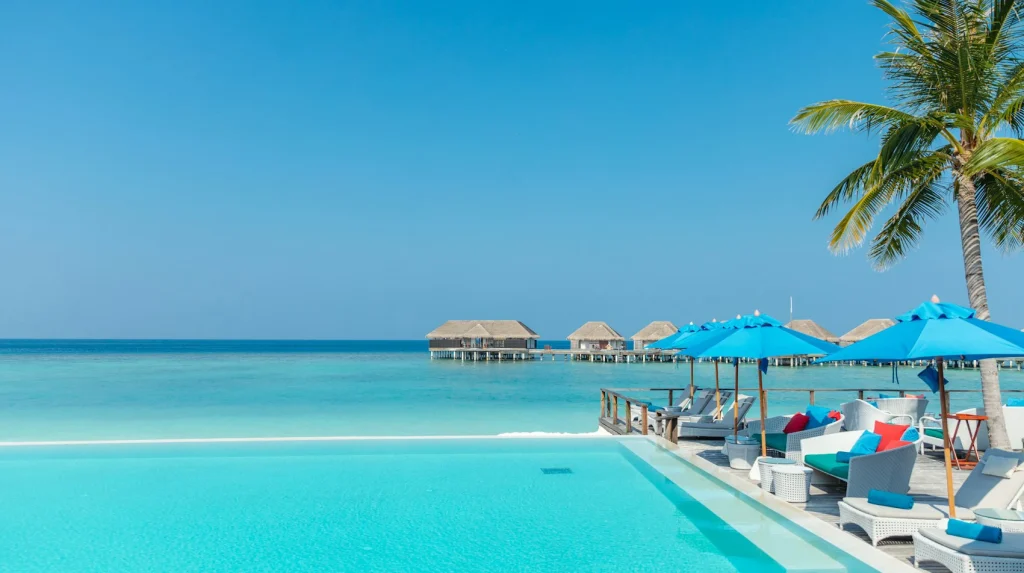
- Resort Islands: You will barely touch cash. Everything is charged to your room and paid by card at checkout.
- Local Islands: If you are staying at a guesthouse on a local island (like Maafushi), bring US Dollars and local Rufiyaa cash for shops and cafes.
Best Credit Card for Couples: Smart Payment Strategy
To ensure you never get stuck, adopt this three-tiered strategy.
1. The Primary Card
Bring a Visa or Mastercard that has no foreign transaction fees. (Amex and Discover are rarely accepted outside of 5-star international hotel chains. Use this for all big-ticket bookings to save your cash reserves.
2. Best Credit Card for Couples: ATM Withdrawal Tips
Don’t bring stacks of currency from home to exchange—you often get poor rates. Instead, use local ATMs to withdraw cash in batches.
- Withdrawal Limits: ATMs often have a per-transaction limit (e.g., 10,000 to 20,000 INR/LKR). You may need to perform two transactions to get enough cash for a week.
- Fees: Your bank and the local machine each charge a fee. To minimize this, withdraw the maximum amount possible each time rather than small amounts frequently.
3. The Emergency Stash
Keep $100- $200 USD (or Euros) in crisp, clean notes, tucked away in a separate bag. If the networks go down, the ATMs run dry, or you lose your card, this cash can be exchanged at any bank or money changer to get you out of a jam.
Final Thoughts: Prepare, Then Relax
Traveling through South Asia is a test of flexibility. Sometimes the power goes out. Sometimes the card machine is “sleeping.” It is all part of the journey.
By carrying a reliable credit card for the big stuff and keeping a healthy roll of rupees for the fun stuff, you get the best of both worlds: the security of modern banking and the freedom to dive into the local culture.
Don’t let payment anxiety keep you from that extra plate of street food or that spontaneous rickshaw ride.
Ready to plan your South Asian adventure with itineraries that account for all the logistics?