best way to carry cash when traveling in Asia
Stepping off the plane in Delhi, Colombo, or Kathmandu brings a sensory rush unlike anywhere else on earth. The humidity, the smells of street food, the sound of tuk-tuks—it’s exhilarating. But amidst the excitement of arrival, a practical worry often nags at the back of a traveler’s mind: Do I have enough cash?
It’s a valid concern. In many parts of the world, digital payments have made physical currency obsolete. You can buy a coffee in Stockholm or board a bus in London with a tap of your watch. South Asia, however, operates on a different rhythm. While digitalization is sweeping through cities like Mumbai and Dhaka, the “cash is king” mantra still holds for many aspects of daily travel, especially once you venture off the beaten path.
Carrying too little cash can leave you stranded without a ride or unable to pay for a delicious meal at a roadside dhaba. Conversely, carrying too much makes you a walking target and adds unnecessary stress to your adventure. Striking the right balance is key to a smooth trip. This guide breaks down exactly how to manage your money across the region, from the bustling markets of India to the serene beaches of Sri Lanka.
The Reality of Cash vs. Digital in South Asia
To understand how much to carry, you first need to understand the payment landscape. South Asia is a region of contrasts. You might find a QR code scanner at a humble vegetable cart in Bangalore, yet be unable to use a credit card at a mid-range guesthouse in rural Nepal.
When You Will Definitely Need Cash
Regardless of which country you visit, specific experiences almost always require paper currency.
- Transportation: While Uber and PickMe (in Sri Lanka) are great, they aren’t everywhere. Local autorickshaws, tuk-tuks, cycle rickshaws, and public buses generally accept small change.
- Street Food and Markets: The best chai, momos, and samosas are sold on the street. These vendors rarely accept cards. The same goes for souvenir shopping in local bazaars, where bargaining is expected.
- Small Guesthouses: Homestays and budget hostels often prefer cash to avoid transaction fees or lack card terminals.
- Tips: Tipping guides, drivers, and porters is standard practice, and this is always done in cash.
- Entry Fees: While major monuments like the Taj Mahal have moved online, smaller museums, temples, and parks often still have ticket counters that only take cash.
When Cards Work Best
You don’t need to carry stacks of banknotes for everything.
- Flights and Trains: Booking intercity travel is almost always done better online in advance.
- Upscale Hotels and Restaurants: Any establishment catering specifically to international tourists or luxury travelers will accept Visa and Mastercard.
- Chain Stores: Supermarkets and branded retail outlets in major cities are card-friendly.
The Risks of Over-Carrying
It is tempting to withdraw a massive lump sum at the airport to “get it over with,” but this is rarely a good idea in South Asia.
Safety is the primary reason. While violent crime against tourists is relatively rare, petty theft and scams can happen. Flashing a thick wad of bills when paying for a $2 souvenir marks you as a target. Additionally, travel insurance policies often have a limit on how much cash they will reimburse if stolen, usually around $200 to $300. If you are carrying $1,000 in your money belt and it goes missing, that loss is on you.
There is also the issue of “closed currency.” Currencies such as the Indian Rupee (INR) and the Nepalese Rupee (NPR) are restricted. You generally cannot obtain them outside the country, and you cannot (legally) take significant amounts out. If you withdraw $500 worth of rupees and only spend $300, converting the remainder back to USD or EUR at the airport is a bureaucratic nightmare involving receipts and poor exchange rates. It is much better to withdraw smaller amounts as you go.
Country-by-Country Breakdown
South Asia isn’t a monolith. Banking infrastructure and costs vary significantly from the Maldives to Bhutan. Here is what to expect in the major tourist destinations.
🇮🇳 India
India is the most digitally advanced nation in the region regarding payments. The Unified Payments Interface (UPI) has revolutionized commerce. However, UPI is difficult for short-term tourists to access without an Indian bank account (though facilities are slowly emerging at airports for foreign tourists to get prepaid wallets).
- ATM Access: Excellent in cities, decent in towns. Rare in remote villages.
- Withdrawal Limits: usually 10,000 INR (~$120 USD) per transaction.
- Daily Cash Budget: For a backpacker, 1,500–2,500 INR (~$18–$30 USD) per day covers food, local transport, and entry fees.
🇳🇵 Nepal
Nepal is a cash-heavy economy, especially for trekkers. If you are heading into the Himalayas (Annapurna or Everest regions), you must carry enough cash for the entire trek. There are no ATMs at high altitudes.
- ATM Access: Widespread in Kathmandu and Pokhara. Non-existent on most trekking routes.
- Withdrawal Fees: Steep. Local banks often charge 500 NPR (~$3.75 USD) per withdrawal.
- Daily Cash Budget: In cities, $20–$30 USD. On treks, budget $30–$40 per day as prices increase with altitude.
🇱🇰 Sri Lanka
Sri Lanka is incredibly tourist-friendly. Cards are widely accepted in hotels and restaurants in Colombo, Kandy, and Galle. However, for the surf towns and hill country trains, cash is essential.
- ATM Access: Reliable in all tourist areas.
- Currency Note: The currency is the Sri Lankan Rupee (LKR).
- Daily Cash Budget: 8,000–12,000 LKR (~$25–$40 USD) covers meals, tuk-tuks, and daily activities.
🇲🇻 Maldives
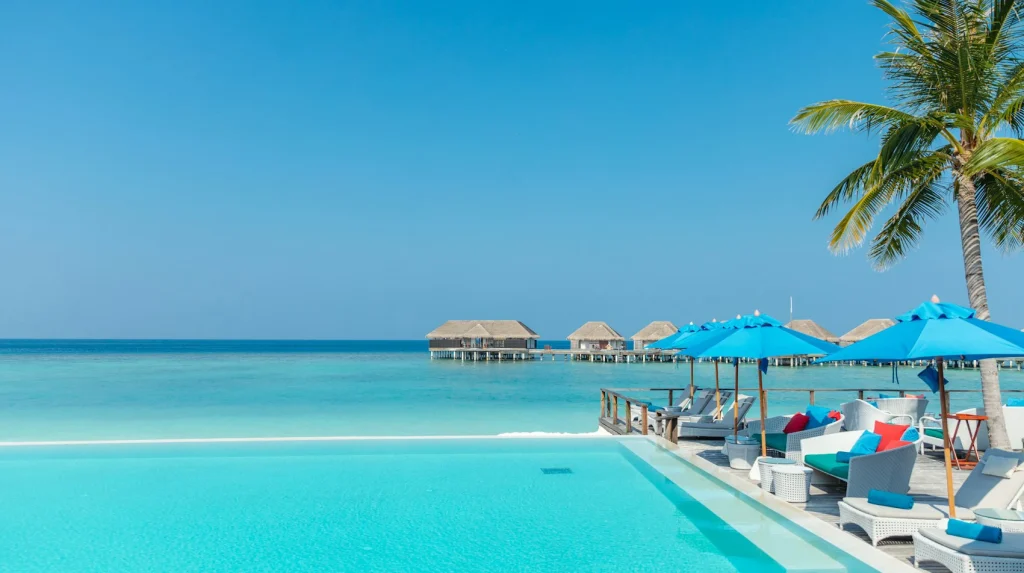
If you are staying at a resort, you barely need cash. Everything is charged to your room and paid by card at checkout. If you are traveling to “local islands” (like Maafushi or Fulidhoo) for a budget guesthouse experience, the dynamic changes.
- ATM Access: Available on inhabited local islands, but machines can be out of service.
- Currency: Maldivian Rufiyaa (MVR), though USD is widely accepted.
- Daily Cash Budget: On local islands, bring mixed small USD bills for tips and small purchases. On resorts, $0 cash is needed daily, just for tips at the end.
The Golden Rule: The $100 Emergency Fund
Regardless of your daily budget, every traveler should have a “break glass in case of emergency” stash.
Pack $100 to $150 USD (or Euros/Pounds) in pristine, crisp notes. Keep this separate from your wallet—perhaps hidden in a toiletry bag or a secret pocket in your backpack.
Why crisp notes? Money changers in South Asia are notoriously picky. A bill with a small tear, ink mark, or excessive wrinkling will often be rejected. This emergency stash is for when the ATM network goes down (it happens), your card gets swallowed, or you find yourself in a town with no power. Having hard currency allows you to exchange money at a bank or hotel front desk to get out of a bind.
Dealing with ATMs: Fees and Logistics
Your ATM card is your best travel companion, but it can also be a source of frustration if you aren’t prepared.
The Two-Fee Problem
When you withdraw money abroad, you often get hit twice.
- Your Home Bank: Many banks charge a “foreign transaction fee” (usually 3%) plus an “out of network ATM fee” ($5).
- The Local Bank: The ATM itself will charge a fee for using a foreign card.
The Solution: Before you leave, get a travel-friendly debit card. Cards like Charles Schwab (USA), Wise (International), or Revolut (Europe/UK) often reimburse ATM fees or offer fee-free withdrawals up to a specific limit. This can save you hundreds of dollars over a month-long trip.
The "Dynamic Currency Conversion" Trap
This is the most common pitfall for travelers. When you insert your card, the ATM screen might ask: “Do you want to be charged in your home currency (e.g., USD) or local currency (e.g., INR)?”
Always choose the local currency.
If you choose your home currency, the ATM applies its own terrible exchange rate, often costing you 5-7% more than the market rate. Let your home bank handle the conversion.
Strategy: Withdraw Max, Withdraw Less Often
To minimize those flat fees charged by local machines, try to withdraw the maximum amount allowed per transaction. If the machine charges a $4 fee, it makes more sense to pull out $200 at once rather than $50 four times.
Best Way to Carry Cash When Traveling Safely
Carrying cash requires a different mindset than carrying a plastic card. You can’t freeze money that’s been stolen. Here is how to keep your funds secure while navigating crowded trains and busy markets.
- The “Decoy Wallet.”
Keep a cheap, secondary wallet in your pocket with a small amount of daily spending money (maybe $10-$15 worth) and an expired library card. If you are pickpocketed, this is what they get. If you are pressured to give money to a beggar or (in rare cases) mugged, you can hand this over without losing your primary stash.
- Distributed Storage
Never keep all your eggs in one basket.
- Day Pack: Keep a small amount for the day’s needs.
- Money Belt/Neck Pouch: Use this for your passport and larger bills (hidden under your clothes).
- Main Luggage: Lock your emergency USD stash deep inside your main bag at your hotel.
- Hotel Safes
Use them. If your guesthouse room doesn’t have a safe, use a luggage lock on the zippers of your main backpack. It prevents opportunistic theft from cleaning staff or other guests.
- Check Your Change
In some countries, scams involve “sleight of hand” where a vendor swaps your large bill for a smaller one and claims you underpaid, or gives you the wrong change. Count your change before you walk away. Also, try to break down extensive notes at hotels or supermarkets. A tuk-tuk driver will rarely have change for a 2,000 Rupee note.
Best Way to Carry Cash When Traveling: Personal Plan
So, what is the final number? How much should you physically carry?
Here is a simple formula to calculate your “Cash on Hand” buffer:
- Calculate Daily Cash Needs: Estimate food, local transport, and entry fees (e.g., $30/day).
- Multiply by 3: You want enough cash to survive three days without an ATM. ($30 x 3 = $90).
- Add Buffer: Add 20% for impulse buys or price surges. ($90 + $18 = $108).
In this scenario, you should aim to have roughly $100-$110 worth of local currency on you at any given time. When you dip below one day’s worth of expenses, head to an ATM and top up your balance.
A Final Word on Planning
Financial stress is the quickest way to ruin a travel vibe. By planning your banking strategy before you board the plane—alerting your bank to travel dates, packing a backup credit card, and bringing an emergency stash—you free your mind to focus on what matters.
You want to be thinking about the sunrise over the Ganges or the flavor of that spicy crab curry, not worrying if the next town has an ATM. Travel smart, carry less, and enjoy the incredible richness of South Asia.
Plan Your South Asian Adventure
Ready to figure out the rest of your budget? Whether you are looking for a luxury escape or a backpacking route through the mountains, getting the itinerary right is the first step.
Check out our guide on Budgeting for a Month in India or explore our Sri Lanka Itinerary Builder to start mapping out costs.