Temple Dress Codes in South Asia for Tourists
It’s 35°C (95°F) in Polonnaruwa, Sri Lanka. You’ve been cycling through ancient ruins all morning. You finally arrive at the Gal Vihara to see the magnificent rock-carved Buddhas, only to be stopped at the gate. The issue? Your knees are visible. You look around and see a line of other tourists frantically trying to rent sarongs or tie jackets around their waists in the stifling heat.
This is one of the most common scenes across South Asia.
For travelers, clothing is usually about comfort and climate. But in South Asia—specifically India, Sri Lanka, Nepal, and Bhutan—clothing is a language of respect. Entering a temple, mosque, or gurudwara isn’t just about sightseeing; it is about stepping into a sacred living space.
Understanding the nuances of religious dress codes isn’t just about following rules; it’s about deepening your connection to the culture you are visiting. When you dress correctly, you shift from being a spectator to being a participant.
This guide will break down precisely what you need to wear, why it matters, and how to pack smart so you never miss a cultural highlight because of a wardrobe malfunction.
Why Temple Dress Code Matters in South Asia
In the West, we often view dress codes as formal vs. casual. In South Asia, the distinction is about purity and modesty.
Religious sites are considered high-energy fields. In Hindu and Buddhist traditions, the physical body is a vessel, and how it is presented impacts the spiritual energy of the space. Modesty is not about shame; it is about humility. By covering up, you signal that you are controlling your senses and focusing inward rather than drawing attention to the physical form.
There is also a strong community aspect. Temples are not just tourist attractions; they are community centers. Grandmothers, monks, and families are there to pray. Walking in with beachwear can be seen as jarring or dismissive of their daily reality.
Practically speaking, the “gatekeepers” (often elderly volunteers or security guards) have strict instructions. They won’t care that your shorts are expensive hiking gear or that it’s incredibly hot. If the code isn’t met, you simply won’t get in.
The Universal Rules: The "Shoulders to Knees" Standard
While every country and religion has its quirks, there is a “Golden Rule” for South Asia that will get you into 90% of places: cover your shoulders and knees.
If you adhere to this baseline, you will rarely face issues. However, let’s look at the specifics, because the definition of “covered” can vary.
1. Remove Footwear
This is non-negotiable across all religions in South Asia. You must leave your shoes outside.
- The Mistake: Wearing expensive lace-up hiking boots that take five minutes to unlace. You will be taking your shoes off ten times a day.
- The Solution: Wear sturdy sandals or slip-on shoes.
- The Sock Debate: In most Buddhist and Hindu temples, socks are allowed and recommended because the stone floors get scorching hot in the afternoon sun. However, in some strictly traditional temples (such as parts of Kerala, India) or Sikh Gurudwaras, bare feet are preferred or even mandatory to connect with the earth.
2. No Hats or Head Coverings (Mostly)
In Hindu and Buddhist temples, you must remove hats and sunglasses to show respect and reveal your face to the Deity.
- The Exception: In Sikh Gurudwaras and Muslim Mosques, covering your head is mandatory for both men and women.
3. The "Tightness" Factor
Yoga pants and leggings are a gray area. While they technically cover the legs, some orthodox temples frown upon tight-fitting “athleisure” wear. Loose cotton or linen trousers are always a safer (and cooler) bet.
Country-Specific Breakdowns
While the Golden Rule applies generally, each country has its own flavor of enforcement and specific expectations.
🇮🇳 India: The Land of Diversity
India is the most complex because it is home to so many religions.
- Hindu Temples: Modesty is key. Men are often required to remove their shirts in South Indian temples (such as those in Tamil Nadu or Kerala) to enter the inner sanctum. Women should wear loose pants, long skirts, or salwar kameez. A shawl (dupatta) is your best friend here.
- Sikh Gurudwaras (like the Golden Temple): Everyone must cover their head. They usually provide orange bandanas at the entrance, but bringing your own scarf is nicer. You must also wash your feet in a shallow pool before entering.
- Mosques (Jama Masjid): Women will be given a robe to wear over their clothes if they aren’t covered from neck to ankle. Men must wear long trousers; shorts are strictly forbidden.

🇧🇹 Bhutan: The Formal Standard
Bhutan is different. Tourism here is high-value and formal.
- Collared Shirts: For entering a Dzong (fortress/monastery), the dress code is formal. Men should ideally wear a collared shirt and long pants. T-shirts are often tolerated if they are tidy, but a collar is safer.
- No Jackets Around Waists: In other countries, tying a jacket to hide your bum or legs is a typical hack. In Bhutanese Dzongs, this is considered sloppy and disrespectful. You must wear your clothes properly.
🇳🇵 Nepal: Practicality Meets Tradition
Nepal is a hiking destination, so the dress code tends to be slightly more relaxed regarding “trekking gear,” but the religious rules remain in place.
- Leather Goods: This is a crucial, often overlooked rule. In many strict Hindu temples in Nepal (like Pashupatinath), you cannot bring leather items inside. This includes leather belts, watch straps, and camera bags. It stems from the reverence for cows.
- Boudhanath Stupa: While circumambulating the stupa, dress modestly; the surrounding monasteries require modest dress.
🇱🇰 Sri Lanka: The "White" Standard
Sri Lankan Buddhist culture is unique in its color preference.
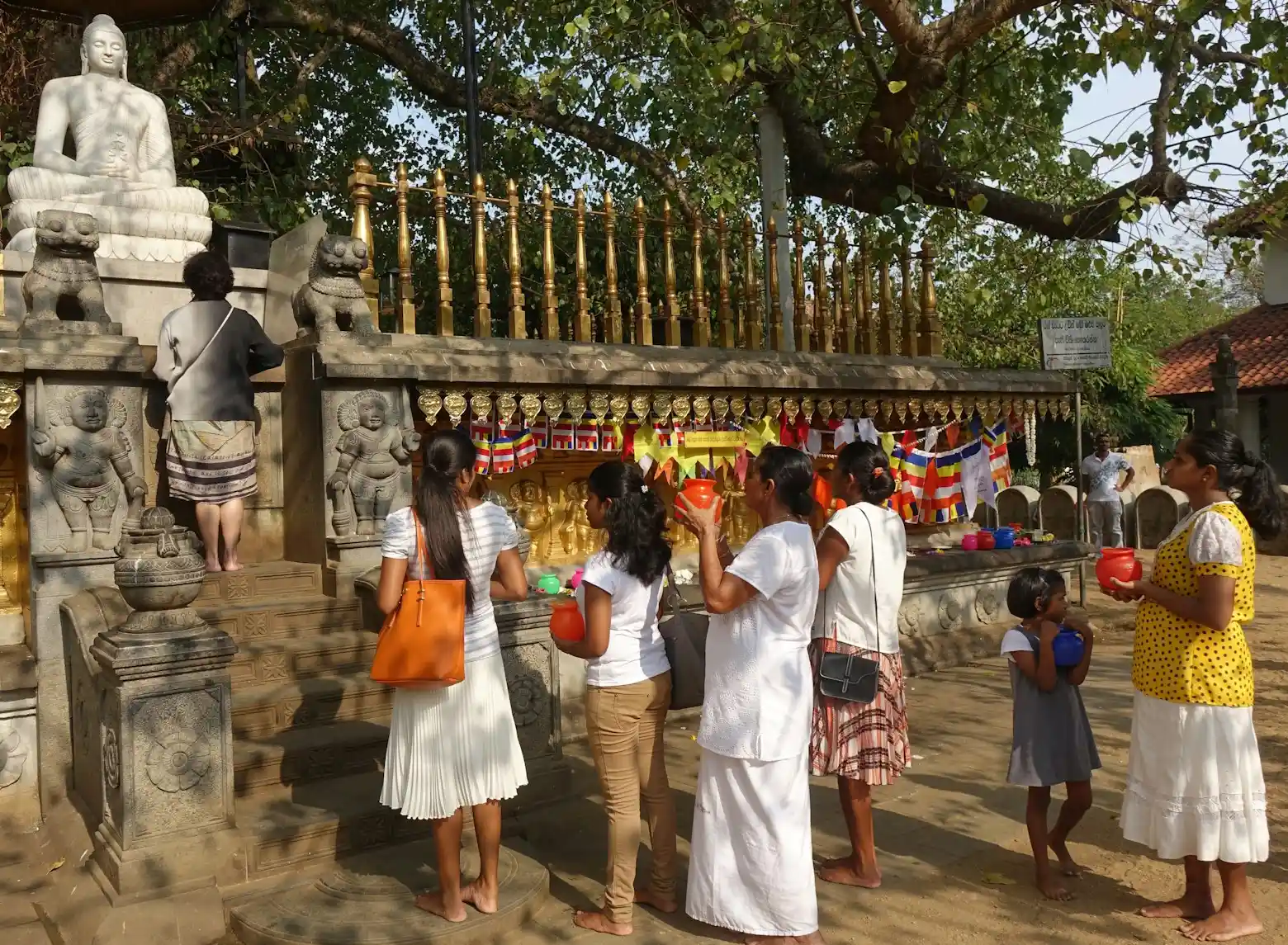
- Wear White: While not a strict law for tourists, Sri Lankan Buddhists wear white to temples to symbolize purity. Wearing white (or light colors) shows you understand the culture. Avoid wearing all-black, which is often associated with bad luck or mourning.
- Strict Enforcement: Sri Lanka is arguably the strictest regarding the “knees” rule. If your shorts graze the top of your knee, you might still get stopped. It needs to be below the knee.
- Backs and Tummies: Crop tops are a definitive no. Your midriff and back should be covered.
Temple Dress Code Mistakes Tourists Commonly Make
Even well-intentioned travelers make mistakes. Here are the most common friction points and how to handle them gracefully.
1. The "See-Through" Sarong
You bought a light, airy white cotton sarong or skirt. It looks modest in your hotel room. But standing in the bright midday sun? It’s completely transparent.
- The Fix: Check your clothes in intense lighting before you pack. Layering is key.
2. Religious Imagery on Clothing
Wearing a t-shirt with a Ganesha or Buddha print is often seen as “cool” in the West. In South Asia, this can be quite unkind. Images of deities are meant for altars, not stretched across a chest or, worse, on shorts or shoes (which are considered the lowest/dirtiest parts of the body).
- The Fix: Avoid clothing with religious prints or deities’ tattoos. If you have a Buddha tattoo, cover it up. Sri Lanka has deported tourists for having visible Buddha tattoos.
3. Public Displays of Affection (PDA)
This isn’t a dress code, but it is part of body conduct. Kissing or hugging your partner for a photo in front of a temple is frowned upon.
- The Fix: Save the romance for the beach or hotel. Keep your hands to yourself or folded in prayer (Namaste/Ayubowan).
4. Turning Your Back on the Deity
It is considered rude to turn your back directly on a statue of the Buddha or a deity to take a selfie.
- The Fix: Stand at an angle. Don’t climb on statues or pedestals for a better camera angle—this is a significant offense.
The Ultimate Temple Packing Checklist
You don’t need to overhaul your entire wardrobe. You need a few strategic items in your day bag.
For Women:
- The “Magic” Scarf: Carry a wide, lightweight scarf or pashmina in your bag at all times. It can act as a head covering in a mosque, a shawl for bare shoulders, or a makeshift skirt if your shorts are too short.
- Maxi Skirt or Elephant Pants: They are a cliché for a reason. They are airy, cover your legs, and are easy to pull on over shorts.
- Slip-on Shoes: Birkenstocks, Tevas, or simple slides. Anything that doesn’t require hands-on work is a win.
For Men:
- Convertible Pants: Zip-off trekking pants are practical. Keep the legs in your backpack and zip them on before the temple gate.
- The Lungi/Sarong: Don’t be afraid to buy and wear a local lungi (men’s sarong) in Sri Lanka or South India. Locals appreciate the effort, and the ventilation is superior to denim jeans.
- Short-Sleeve Button-Up: A linen button-up looks brighter than a t-shirt and is respectful enough for even the strictest Bhutanese Dzong.
Handling "Wardrobe Failures"
So, you messed up. You arrived at the Golden Temple in shorts. Don’t panic.
Most major religious sites are used by unprepared tourists. Look near the entrance; there is often a rental booth.
- Rentals: You can usually rent a wrap or sarong for a small fee (or a deposit). It might not be fashionable, and it has been worn by 50 other people that day, but it gets you in.
- Buy Local: Stalls outside temples sell cheap fishermen’s pants and scarves. Treat it as a souvenir shopping opportunity.
- Acceptance: If there are no rentals and the guards say no, accept it with a smile. Do not argue. It is their house of worship. Admire the structure from the outside and plan better for tomorrow.
Planning Your Cultural Itinerary
Navigating the cultural nuances of South Asia can be overwhelming. Still, it is also the most rewarding part of the journey. The effort you put into respecting local customs is usually repaid tenfold with the warmth and welcome you receive from locals.
If you are looking to build a trip that balances major cultural sites with hidden gems—without the stress of logistical headaches—planning your route is essential.
Check out our South Asia Cultural Itinerary Planner to start mapping out your journey through the temples and traditions of this incredible region.