Best Travel Backpacks for Long Trips in South Asia
Standing on a train platform in Varanasi, watching the chaotic symphony of life unfold around you, the last thing you want to worry about is the 20 kilograms of dead weight strapped to your back. South Asia—encompassing the vibrant cultures of India, Nepal, Sri Lanka, Pakistan, Bangladesh, and beyond—is a sensory overload in the best possible way. But it is also a region where your luggage choice can significantly determine the quality of your trip.
The humidity is different here. The crowds are thicker. The terrain shifts from dusty plains to mountain passes in the blink of an eye. This isn’t a European city break where your roller bag glides effortlessly over paved sidewalks. This is an adventure where mobility is your greatest asset.
Choosing the right backpack for a long trip in South Asia isn’t about buying the most expensive gear with the most technical-sounding features. It’s about finding a reliable companion that can handle the heat, squeeze into a crowded tuk-tuk, and not break your back during a three-hour walk to a hostel because the taxi dropped you off at the wrong landmark. This guide isn’t about pushing specific brands or top-10 lists; it’s about understanding the unique demands of travel in this region and choosing gear that fits your body, travel style, and the climate.
Why Your Backpack Matters More Here
Travel in South Asia is physically engaging. You are rarely insulated from your environment. In many Western destinations, you might move from a climate-controlled airport to a taxi to a hotel lobby. Here, the journey is often more tactile. You might find yourself hopping off a sleeper bus at 4 AM, wading through a monsoon puddle, or climbing four flights of narrow stairs because elevators are a luxury, not a standard.
The Terrain Factor
The ground beneath your feet changes constantly. You will encounter broken pavement, dirt paths, sandy beaches, and cobblestones. A suitcase with wheels becomes a liability the moment you step off the smooth airport floor. You end up carrying it by the handle anyway, which is far more exhausting than carrying a properly fitted backpack. A backpack keeps your hands free—essential for holding a water bottle, checking Google Maps, or navigating a busy market while keeping your belongings close.
The Transport Squeeze
Local transport is often the highlight of a South Asian trip, but space is at a premium. Whether it’s a tuk-tuk in Colombo, a rickshaw in Dhaka, or a local bus in Kathmandu, luggage storage is rarely standardized. You should sit with your bag on your lap, shove it under a seat, or toss it onto a roof rack. A soft-sided backpack can be squished and molded to fit into awkward spaces. A rigid suitcase or an oversized trekking frame cannot.
Security and Agility
Crowds are part of the daily rhythm. In dense urban areas like Mumbai or Old Delhi, agility is safety. A streamlined backpack allows you to move through crowds without clipping people or getting stuck. It also keeps your possessions physically attached to you. When you are mobile, you are less of a target for scams or theft compared to someone struggling with cumbersome luggage.
The Reality of Size and Weight
There is a typical traveler’s fallacy: “I am going for a long time, so I need a big bag.” This is almost always a mistake, especially in South Asia. The duration of your trip does not dictate the size of your bag; your laundry cycle does. Whether you are traveling for three weeks or three months, you generally only need a week’s worth of clothes.
The "Just in Case" Trap
It is tempting to pack for every eventuality. What if I get invited to a formal wedding? What if I need heavy winter gear? In reality, South Asia is incredibly affordable. If you desperately need a thick jacket for a trekking detour in the Himalayas, you can buy or rent one locally for a fraction of the price of carrying it for three months. If you need a nice shirt, you can have one tailored in Vietnam or India for a low price.
The Ideal Volume: 40L to 60L
For most long-term travelers, the sweet spot is between 40 and 50 liters. According to IATA cabin baggage guidelines, backpacks around 40L often meet international carry-on size limits.
- Under 40L: Doable for minimalists, but might be tight if you are carrying tech (laptops, cameras) or want space for souvenirs.
- 40L–60L: The Goldilocks zone. Large enough to carry essentials comfortably but small enough to force you to be selective. Many bags in this range are carry-on compliant for flights, saving you checked bag fees and the risk of lost luggage.
- Over 60L: Generally unnecessary unless you are carrying specialized camping gear or sleeping bags. A 60L+ bag is heavy, makes you less agile, and screams “tourist.” It makes simple tasks, like walking a mile to your guesthouse, feel like a punishment.
Weight Distribution is Key
It matters less how much the bag weighs on a scale and more how it feels on your body. A well-designed suspension system transfers the weight from your shoulders to your hips. When trying on packs, load them up with weights (most outdoor stores carry sandbags for this). If you feel the weight pulling back on your shoulders, the fit is wrong. You want the hip belt to hug your iliac crest (hip bones) securely, carrying about 80% of the load.
The Climate Factor: Ventilation and Rain
South Asia is synonymous with heat and humidity. From the tropical coasts of Sri Lanka to the steamy jungles of Southeast Asia, you will sweat. A lot. This makes the back panel of your backpack one of its most critical features.
Suspended Mesh vs. Foam Panels
- Foam Panels: These sit directly against your back. While they keep the weight close to your center of gravity (good for balance), they act as a giant insulator. After ten minutes of walking in 90% humidity, your shirt will be soaked through.
- Suspended Mesh (Trampoline Style): These packs feature a tensioned mesh back panel that creates an air gap between your back and the pack’s main body. This allows air to circulate, significantly reducing sweat buildup. For South Asia, a suspended mesh back panel is a game-changer for comfort.
Rain Protection
Monsoon season is real, and tropical downpours are sudden and intense. No backpack is genuinely 100% waterproof unless it’s a dry bag (which is terrible for hiking). Most “water-resistant” fabrics will soak through in a heavy deluge. National Geographic notes that waterproof materials and rain covers are essential when traveling through monsoon regions.
- Integrated Rain Covers: Many travel packs come with a built-in rain cover tucked into a bottom pocket. These are convenient and effective.
- Aftermarket Covers: If your chosen bag doesn’t have one, buy a separate rain cover. It’s a cheap insurance policy for your clothes and electronics.
- The Liner Method: For foolproof protection, line the inside of your backpack with a heavy-duty trash compactor bag. Even if the backpack gets soaked, the contents stay dry.
The Great Debate: Travel Backpack vs. Hiking Pack
There are generally two types of backpacks you’ll see on the road: the front-loading “travel backpack” and the top-loading “hiking pack.” Understanding the difference is crucial for your daily sanity.
The Hiking Pack (Top-Loader)
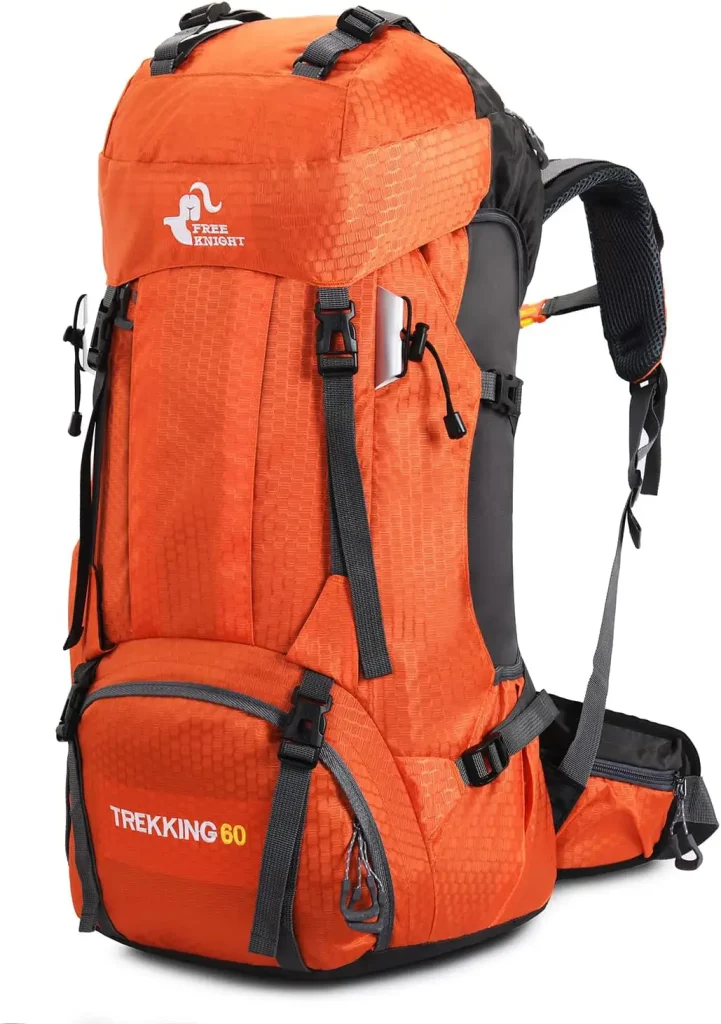
These are tall, cylinder-shaped bags designed for the trail. They usually have a drawstring top.
- Pros: Superior suspension systems are often more comfortable for carrying heavy loads over long distances.
- Cons: Access is a nightmare. To get to the clean socks at the bottom, you have to dump everything else out. They usually lack lockable zippers and have many dangling straps that get caught in conveyor belts.
The Best Travel Backpack (Front-Loader/Clamshell)
These open like a suitcase, with a zipper that goes all the way around the main compartment.
- Pros: You can see everything at once. Packing and unpacking are fast and organized. You can grab a specific item without exploding your entire bag. The straps often zip away for air travel to prevent damage.
- Cons: Sometimes the harness systems aren’t as advanced as high-end hiking packs (though they are getting much better).
The Verdict for South Asia
Unless you are planning a trip that is 80% trekking in the Himalayas and 20% city travel, get a front-loading travel backpack. The convenience of suitcase-style access in a hostel dorm room or a cramped hotel cannot be overstated. You will likely be packing and unpacking every few days. A top-loader becomes frustrating very quickly in a standard travel scenario.
Security Features for Peace of Mind
Petty theft can happen anywhere, but crowded transit hubs and dorm rooms have higher risks. Your backpack doesn’t need to be safe, but it should be a deterrent.
- Lockable Zippers: Look for sliders that can overlap, allowing you to slide a TSA padlock through them. This stops opportunistic theft (someone quickly unzipping your bag while you’re standing in line).
- Slash-Proof Materials: Some brands offer wire-reinforced fabric. While cool, this adds significant weight. Usually, awareness is better than armor.
- Hidden Pockets: A backpack with a discrete pocket against your back (where the straps are) is excellent for stashing emergency cash and copies of your passport.
Choosing the Right Style for You
Ultimately, the “best” backpack is subjective. It depends on your body type and how you plan to move.
The Digital Nomad
If you are carrying a laptop, charger, hard drives, and perhaps a drone, you need structure. Look for a pack with a dedicated, padded laptop compartment. Crucially, this compartment should be “suspended” (not touching the very bottom of the bag) so your computer doesn’t crack when you set the bag down on a hard floor.
The Adventure Seeker
If you plan to do multi-day treks in Nepal or ride motorbikes through Vietnam, prioritize a harness system. You need a robust hip belt and sternum strap. You might sacrifice the convenience of a front-loader for the carry comfort of a hiking hybrid.
The Budget Backpacker
You don’t need to spend $300 on a bag. Many budget-friendly outdoor brands offer solid 40L packs. The trade-off is usually durability (cheaper zippers) and weight (heavier fabrics). However, if you treat it well, a mid-range bag will survive a six-month trip just fine. Prioritize fit over brand name. Go to a store, load it up, and walk around for 20 minutes. If it pinches or rubs, it’s not the one, regardless of the price.
Experience Over Gear
At the end of the day, your backpack is just a container. It holds the things you need to survive, but it shouldn’t define your trip. The most important thing is that once you put it on, you stop thinking about it.
If your bag is comfortable, organized, and reliable, it fades into the background. It allows you to focus on the smell of incense in the air, the taste of spicy curry, and the incredible people you meet along the way. Don’t stress too much about finding the “perfect” pack. Find the one that fits you, pack less than you think you need, and explore.
If you are ready to start planning the actual adventure now that your gear is sorted, we can help you build an itinerary that fits your style—whether that involves mountain treks or beach hammocks.