Best Areas to Stay in Sri Lanka (With Hotel Types)
Planning a trip to Sri Lanka is often more complex than travelers anticipate. Looking at a map, the island appears small—a manageable teardrop in the Indian Ocean. However, due to diverse topography and winding single-lane roads, distances that look short can take hours to traverse. Consequently, choosing where to stay isn’t just about finding a nice pool or a comfortable bed; it is about strategic positioning.
The “best” area heavily depends on your itinerary, the time of year you visit, and the specific experience you crave. A beach villa on the south coast offers an entirely different lifestyle compared to a tea planter’s bungalow in the misty central highlands. Furthermore, Sri Lanka has two distinct monsoon seasons that hit opposite sides of the island at different times, meaning the perfect beach town in January might be rainy and rough in July.
This guide moves beyond simple hotel ratings to help you understand the personality of Sri Lanka’s key regions. We will explore the logistics of each area, the types of accommodation available, and the reality of staying there. Whether you are a backpacker looking for a surf cabana or a family seeking a luxury resort, understanding the lay of the land is the first step to a successful trip.
Why Area Choice Matters in Sri Lanka
Before booking accommodation, you must accept that Sri Lanka is a destination of trade-offs. You rarely get high-speed connectivity, absolute seclusion, and rapid transit access all in one place.
The primary factor driving your area choice should be the monsoon. The Southwest Monsoon (Yala) affects the south and west coasts and the hill country from May to September. The Northeast Monsoon (Maha) hits the east coast and northern regions from October to January. Ignoring this can lead to booking a beach resort during a month when swimming is unsafe due to rough currents.
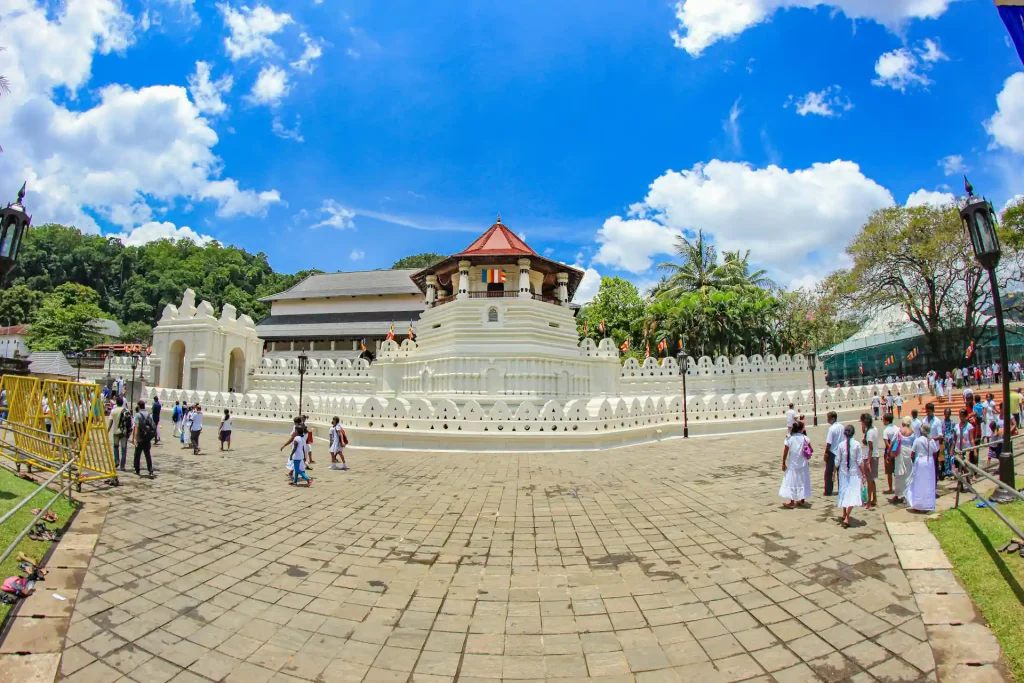
Secondly, travel time dictates location. If you want to see the Temple of the Tooth in Kandy and climb Sigiriya Rock, staying in one central location might seem logical, but the commute between them can be exhausting. It is often better to book shorter stays in specific hubs rather than attempting a “hub and spoke” model from a single base.
Colombo Areas Explained
Most international flights land near Colombo. While many travelers skip the capital to rush to the beach, spending a night or two here helps you acclimate. The city is a patchwork of distinct neighborhoods, each with a different vibe.
Fort and Pettah
This is the commercial and historical heart of the city. If you want to be in the thick of the action, close to colonial architecture, bustling markets, and the chaotic energy of the central train station, this is the place.
- The Vibe: Energetic, noisy, and historical.
- Hotel Types: You will find high-end international business hotels here, alongside restored colonial heritage hotels. Budget options are available but can be gritty.
- Best For: Travelers who enjoy urban photography, history, and walking tours.

Cinnamon Gardens (Colombo 07)
A stark contrast to the chaos of Pettah, Cinnamon Gardens is the city’s most affluent neighborhood. The streets are wide, tree-lined, and house embassies, museums, and high-end cafes.
- The Vibe: Quiet, sophisticated, and green.
- Hotel Types: This area specializes in boutique hotels and converted colonial mansions. It is less about high-rise luxury and more about personalized, intimate service.
- Best For: Couples and families seeking a calm start or end to their trip.
Mount Lavinia
Located a bit further south, this suburb has a distinct beach-town atmosphere, despite being part of the metro area. It has a faded colonial charm but is disconnected from the central city attractions.
- The Vibe: Relaxed, humid, and slightly old-world.
- Hotel Types: The centerpiece is a massive colonial-era hotel, surrounded by smaller guesthouses and mid-range beach hotels.
- Reality Check: The commute into central Colombo can take over an hour during rush hour. Stay here only if you prefer the ocean over city sightseeing.
Hill Country Stays: Kandy, Nuwara Eliya, and Ella
The central highlands offer a reprieve from the tropical heat. As you ascend, the air cools, and pine forests and tea plantations replace coconut palms.
Kandy
As the cultural capital, Kandy is an essential stop, but it is also a congested city located in a valley.
- The Layout: You generally have two choices: stay near the Kandy Lake (city center) or up in the surrounding hills (Anniewatte or Heerassagala).
- Hotel Types: The hills are famous for homestays and family-run guesthouses that offer incredible views over the city. The city center hosts older, heritage hotels that provide convenience but are noisy.
- Reality Check: Traffic in Kandy is notoriously bad. If you stay deep in the hills, once you return to your hotel for the evening, you likely won’t want to go back out for dinner.
Nuwara Eliya
Known as “Little England,” this is the town at the highest elevation. The architecture is mock-Tudor, and the climate is cool enough to require fleece jackets and heaters.
- The Vibe: Misty, colonial, and agricultural.
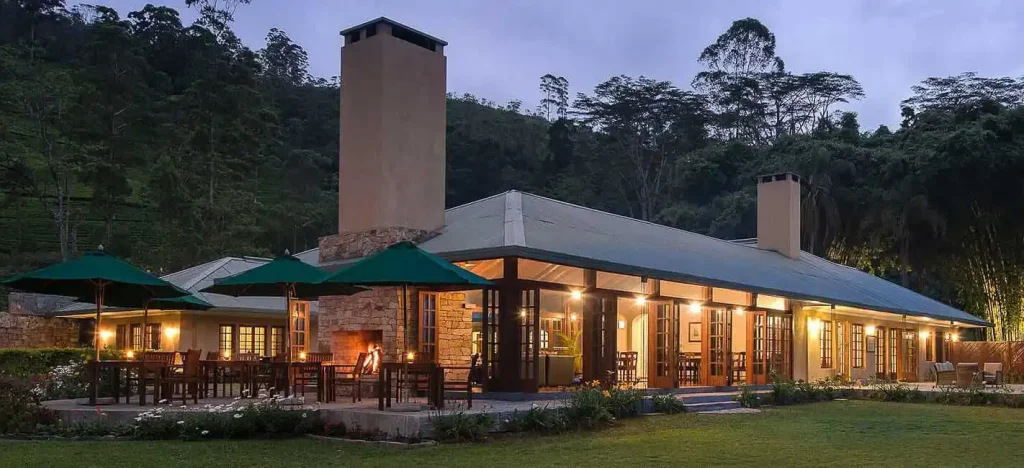
- Hotel Types: This is the place to stay in converted colonial clubs and planters’ bungalows. These properties often feature fireplaces, billiards rooms, and high tea services.
- Best For: Travelers who appreciate history and cooler weather.
Ella
Ella has transformed from a sleepy village into a backpacker and tourism hub. The main street is lined with cafes and bars, while the surrounding hills offer tranquility.
- The Layout: The main street is noisy. The best accommodation is tucked away on the hillsides facing Ella Rock or Little Adam’s Peak.
- Hotel Types: Accommodation ranges from budget-friendly hostels and homestays to high-end boutique resorts with infinity pools overlooking the gap.
- Reality Check: Many hotels here require a tuk-tuk ride up steep, unlit roads. Accessibility can be an issue for those with mobility concerns.

Beach Areas: South vs. East
Sri Lanka possesses an incredible coastline, but the experience varies drastically depending on which coast you choose.
The South Coast (Galle, Mirissa, Tangalle)
Best visited from November to April, the south coast is the most developed for tourism.
- Galle Fort: Staying inside the UNESCO World Heritage Fort is a unique experience. It is a walkable grid of cobblestone streets free from heavy traffic. Accommodation consists almost exclusively of luxury boutique villas and restored merchant houses. It is pricey but atmospheric.
- Mirissa & Unawatuna: These are beach towns with a mix of nightlife and relaxation. Hotels range from simple beach shacks to mid-range resorts. Mirissa is known for whale watching and a younger crowd.
- Tangalle: Further east along the southern curve, Tangalle is quieter. The beaches are wilder with stronger waves. Accommodation here leans toward secluded lagoons and high-end resorts tucked into the jungle.

The East Coast (Trincomalee, Arugam Bay, Pasikudah)
Best visited from May to September, the East Coast is less commercialized and offers a more laid-back pace.
- Trincomalee (Uppuveli & Nilaveli): These beaches offer calm, shallow waters ideal for swimming and snorkeling. Accommodation is a mix of budget guesthouses and developing mid-range resorts. It feels far less crowded than the south.
- Arugam Bay: The surf capital. The vibe is decidedly bohemian. You won’t find many chain hotels here; instead, look for cabanas, eco-huts, and small, owner-operated boutique hotels.
- Pasikudah: This area is distinct because it was explicitly developed for luxury tourism. The bay is calm and shallow, lined with large-scale resorts offering all-inclusive packages. It lacks a local “town” feel but is perfect for a resort-based family holiday.
The Cultural Triangle: Dambulla and Sigiriya
Located in the dry zone, this area is home to ancient ruins and national parks.
- The Vibe: Rural, dry, and centered on nature and history.
- Hotel Types: This region pioneered the concept of the “Eco-Resort” in Sri Lanka. Expect hotels that blend into the forest, featuring open-air lobbies and rooms designed to minimize environmental impact.
- Heritance Style: You will find several hotels designed by Geoffrey Bawa (the father of tropical modernism) here. These properties incorporate natural elements such as boulders and lakes into their structures.
Reality Check: You are in the jungle. You will encounter monkeys, geckos, and insects. It is part of the charm, but something to be aware of if you prefer sterile environments.
Best Hotel Types by Area
Understanding the terminology used in Sri Lanka will help manage your expectations.
Planters' Bungalows (Hill Country)
These are restored homes formerly owned by British tea estate managers. They usually have only 3 to 5 rooms and offer a “hosted” experience, with set menus for meals and highly personalized service. They are excellent for privacy and history, but offer few amenities, such as gyms or large pools.
Boutique Villas (Galle & South Coast)
Often sold by the room or as a whole house, villas are the premium choice on the south coast. They typically come with a dedicated chef and staff. This is the ideal option for multi-generational families or groups of friends who want privacy without the rigid hotel schedule.
Rest Houses and Guesthouses (Island-wide)
“Rest House” is an older term for government-run or budget accommodation. “Guesthouses” are family-run establishments. In Sri Lanka, guesthouses are the backbone of the hospitality industry. The facilities may be simple, but the home-cooked rice and curry are often superior to what you find in five-star hotels. This is the best way to connect with local culture.
Eco-Lodges and Cabanas (Dry Zone & East Coast)
These structures prioritize immersion in nature. “Cabanas” usually refers to simple wooden structures on the beach or in the jungle. While some are rustic with mosquito nets and cold water, “Luxury Cabanas” with air conditioning and plunge pools are becoming common in areas like Yala and Arugam Bay.
Integrated Resorts (West Coast & Pasikudah)
If you want a standard holiday experience—kids’ clubs, buffet breakfasts, swim-up bars, and gym facilities—stick to the large resorts in Bentota (West Coast) or Pasikudah (East Coast). These operate similarly to resorts worldwide and are the safest bet for travelers who want predictability.
Planning Your Route First
The biggest mistake travelers make in Sri Lanka is booking a hotel because it looks beautiful online, without realizing it doesn’t fit the flow of their trip. A stunning villa in Tangalle is terrific, but if your flight leaves at 8:00 AM, the drive to the airport is too long to make it practical for your final night.
Start by mapping your route based on the season and your interests (ruins, surf, tea, or wildlife). Once the route is set, choose the accommodation type that elevates that specific leg of the journey. Mix high-end villas with local guesthouses to get the full spectrum of Sri Lankan hospitality.
Planning for a Sri Lanka trip ? Build your Sri Lanka route before booking hotels