Annapurna Base Camp Trek – 5-Day Express Itinerary
Thinking about trekking in the Himalayas, but worried you don’t have weeks to spare? You’re not alone. While many of Nepal’s most famous routes require lengthy sabbaticals, the Annapurna Base Camp (ABC) Trek is a stunning exception that offers high-altitude thrills on a tighter timeline.
Imagine standing at the foot of the world’s 10th-highest mountain, surrounded by a 360-degree amphitheater of snow-capped peaks, after just a few days of hiking. This isn’t a daydream; it’s the reality of the ABC Trek. This route is a classic for a reason—it combines the rich cultural tapestry of Gurung villages with the raw, untamed beauty of the Annapurna Sanctuary.
Whether you are a seasoned trekker looking for a quick Himalayan fix or a novice hiker ready to push your boundaries, this 5-day express itinerary is designed to maximize your experience without exhausting your vacation days. In this guide, we’ll walk you through everything you need to know, from the moment you land in Kathmandu to the triumphant sunrise over Machhapuchare. Pack your bags; the mountains are calling.
Overview: The Magic of the Annapurna Sanctuary
The Annapurna region is one of Nepal’s most popular trekking areas and is officially managed under the guidelines of the Nepal Tourism Board. The Annapurna Base Camp Trek is widely considered one of the most accessible yet visually rewarding treks in Nepal. Unlike the Everest Base Camp trek, which requires a flight into the high-altitude airport of Lukla, the journey to ABC starts in the lower, lush foothills near Pokhara. This allows for a more gradual acclimatization and a diverse range of scenery.
This specific 5-day express itinerary is perfect for those who want to experience the grandeur of the Himalayas but are short on time. It is a small-group organized adventure that handles the logistics so you can focus on the trail. You’ll start with a scenic drive from Kathmandu to the lakeside city of Pokhara. From there, you will spend the next five days immersing yourself in nature—trekking through blooming rhododendron forests, navigating bamboo jungles, and ascending into the alpine zone where the air is thin, and the views are endless.
The crown jewel of this trek is undoubtedly the sanctuary itself—a high glacial basin surrounded by a ring of peaks, including the iconic “Fish Tail” (Machhapuchare), Hiunchuli, and the massive south face of Annapurna I (8091m). Your English-speaking guide will handle all permits, teahouse accommodations, and route planning, ensuring your journey is safe and seamless.
What's Included in Your Adventure?
When you book this express tour, we aim to make your life as easy as possible. Here is a breakdown of what is typically covered to ensure you have a hassle-free experience:
Transportation: Private transfers, including airport pick-up and drop-off, and the tourist bus to Pokhara. All ground transportation during the trek (taxi/jeep to trailheads) is also included.
Gear: Essential items like a down jacket and sleeping bag are provided (to be returned after the trek). You’ll also receive a free hiking t-shirt.
Permits & Fees: All necessary trekking permits (ACAP and TIMS) and local taxes are handled for you.
Guide: A friendly, local English-speaking trekking guide/Sherpa will lead the way, ensuring your safety and sharing local insights. Their salary, insurance, food, and lodging are all covered.
Accommodation: You will stay in trekking lodges (teahouses) along the route. In Pokhara, hotel accommodation is usually provided before the trek starts (check specific package details).
Meals: Fuel is crucial for trekking! The package includes 5 Breakfasts, 5 Lunches, and 5 Dinners during the trek. You’ll also enjoy a farewell dinner to celebrate your achievement.
Extras: A certificate of achievement to prove you made it to the top!
Your 5-Day Itinerary: Step-by-Step
This itinerary is fast-paced but manageable for someone with a moderate fitness level. Here is your daily schedule.
Day 1: Kathmandu to Pokhara
Your journey begins with a 7-hour scenic drive from Kathmandu to Pokhara via a tourist bus. As you leave the hustle of the capital, the road winds along the Trishuli River, offering your first glimpses of rural Nepal—terraced fields, suspension bridges, and roadside markets.
Upon reaching Pokhara, the vibe changes completely. This lakeside city is the adventure capital of Nepal, known for its laid-back atmosphere and stunning views of the Annapurna range reflecting off Phewa Lake. You’ll have the evening to explore the Lakeside area, enjoying a boat ride or grabbing a pre-trek meal at one of the many restaurants. You’ll spend the night at a hotel, resting up for the days ahead.
Day 2: Pokhara to Chhomrong (2170m)
Drive: 1 hour taxi + 2 hours local jeep
Trek: ~4-5 hours
Max Altitude: 2170m (7119 ft)
After breakfast in Pokhara, you’ll take a private vehicle to Nayapul and then a local jeep to Siwai or Ghandruk Phedi. The drive itself is an adventure, taking you deep into the hills. Your trek officially begins near the Modi River. You will cross a long suspension bridge—a classic Himalayan experience—and begin the ascent towards Jhinu Danda.
From Jhinu, the trail climbs steeply up stone steps to Chhomrong. This is a large, permanent Gurung village and the gateway to the sanctuary. As you arrive, you are rewarded with your first up-close views of Annapurna South and the sharp peak of Machhapuchare. The village culture here is vibrant; you’ll see locals tending to crops and mules transporting goods up the mountain. Tonight, you sleep in a teahouse and enjoy a hearty dinner of Dal Bhat (lentil soup and rice) to refuel.
Day 3: Chhomrong to Himalaya (2920m)
Trek: 6-7 hours
Max Altitude: 2920m (9580 ft)
Wake up early to catch the sunrise over the peaks visible from your lodge. Today is a challenging but rewarding day. You start by descending 2,500 stone steps down to the Chhomrong Khola river, crossing another suspension bridge, and then climbing back up to Sinuwa.
Leaving Upper Sinuwa, the trail enters a dense forest of bamboo, rhododendron, and oak. If you are trekking in spring, the flowers will be in full bloom, turning the forest into a sea of red and pink. The path is relatively smooth here until you reach Bamboo and Dovan. From Dovan, the altitude starts to kick in as you ascend towards the settlement known simply as “Himalaya.” The air gets cooler, and the valley narrows. You’ll stay overnight here, surrounded by the towering walls of the gorge.

Day 4: Himalaya to Annapurna Base Camp (4130m)
Trek: 6-7 hours
Max Altitude: 4130m (13,550 ft)
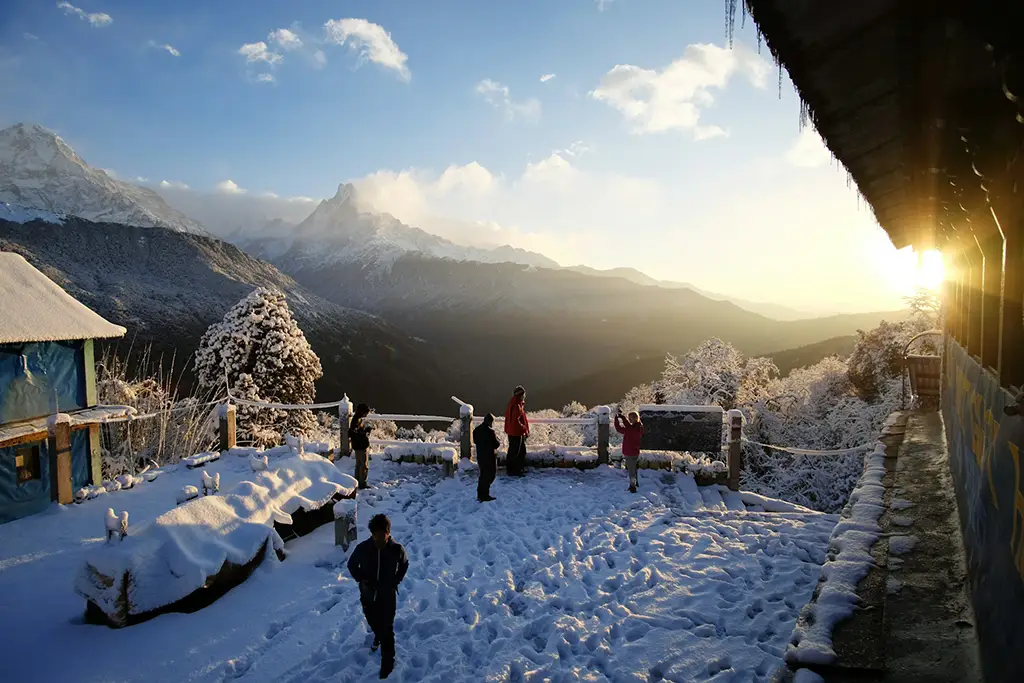
Annapurna Base Camp sits at an altitude of 4,130 meters, making it one of the most significant Himalayan trekking destinations documented by the Himalayan Database. This is the big day! You will be trekking into the heart of the sanctuary. The trail climbs past Hinku Cave and Deurali. As you ascend, the vegetation thins, giving way to alpine scrub and rocky terrain. You are entering the high-altitude zone.
You’ll first reach Machhapuchare Base Camp (MBC) at 3700m. This is a great spot to stop for lunch and acclimatize. The views of Machhapuchare from here are spectacular—you are practically at the foot of the “Fish Tail.”
From MBC, it’s a slow, steady 2-hour push to Annapurna Base Camp. The gradient is not too steep, but the thin air makes it feel harder. As you enter the sanctuary, the view opens up to reveal a 360-degree panorama of behemoth peaks: Annapurna I, Annapurna South, Gangapurna, and Hiunchuli. Watching the sunset turn the south face of Annapurna gold is a spiritual experience you will never forget. You’ll sleep at ABC tonight—make sure to bundle up!
Day 5: ABC to Sinuwa (2360m)
Trek: 6 hours
Max Altitude: Start at 4130m, descend to 2360m
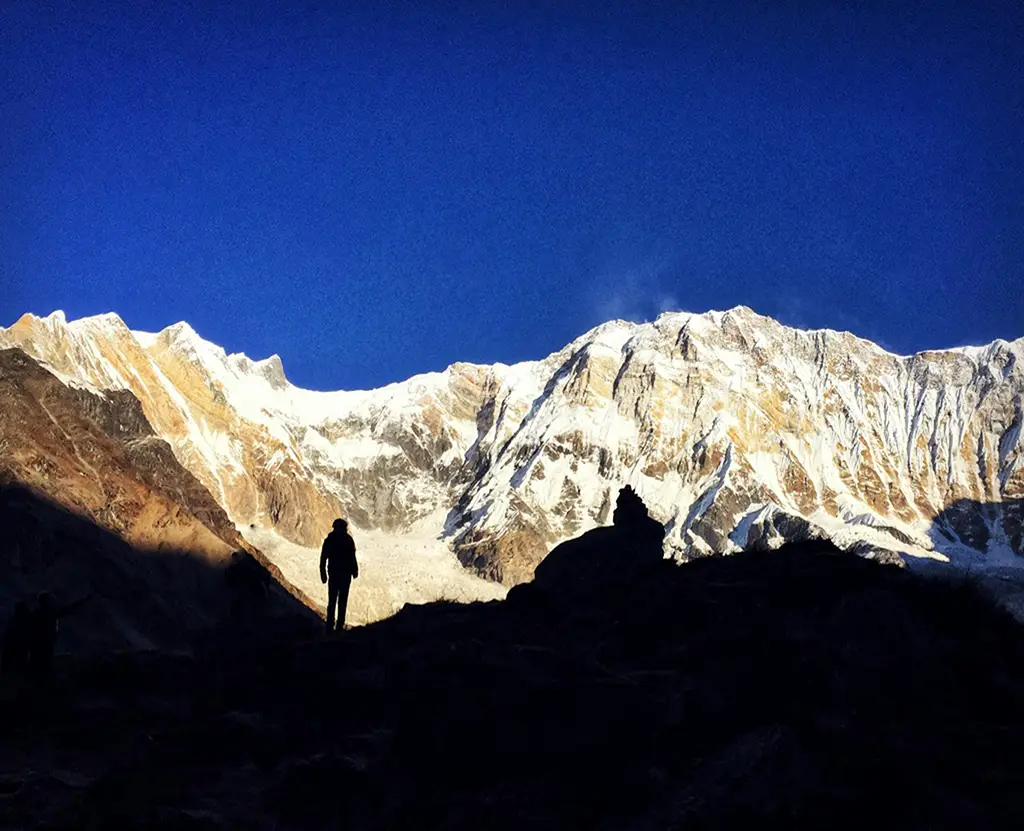
Waking up at Annapurna Base Camp is surreal. If you can brave the freezing pre-dawn temperatures, stepping outside to watch the sunrise illuminate the peaks is essential. After soaking it all in and grabbing breakfast, you begin the long descent.
Going down is generally faster and easier on the lungs, though it can be tough on the knees. You retrace your steps back through MBC, Deurali, Himalaya, Dovan, and Bamboo, finally resting for the night at Sinuwa. The drop in altitude means thicker, warmer air and a much better night’s sleep!
Day 6: Sinuwa to Pokhara
Trek: 2 hours
Drive: ~4 hours
It’s the final stretch. From Sinuwa, you descend back to the Chhomrong Khola and climb the steps back up to Chhomrong (yes, those steps again!). From Chhomrong, the trail drops steeply down to Jhinu Danda.
From the road head at Siwai, a jeep will be waiting to take you back to Nayapul, where you’ll switch to a vehicle for the drive back to Pokhara. Once you arrive at your hotel in Pokhara, the trek officially concludes. A hot shower and a cold beer at a lakeside bar are the perfect way to celebrate your success.
Best Time to Visit Annapurna Base Camp
Choosing the right season is critical for a safe and enjoyable trek.
Spring (March to May): This is arguably the best time to trek. The weather is stable, temperatures are moderate, and the rhododendron forests are blooming, adding splashes of color to the green hills. Visibility is generally good, though haze can appear later in the day.
Autumn (September to November): This is the most popular trekking season in Nepal. The monsoon rains have cleared the dust, offering crystal-clear mountain views. The weather is generally sunny and warm, though nights get colder as November approaches.
Winter (December to February): Trekking is possible, but it will be very cold, especially at ABC. Snow can sometimes block the trail near Deurali, making the sanctuary inaccessible. This season is only for prepared, experienced trekkers.
Monsoon (June to August): Not recommended. The trails are slippery, leeches are rampant, and the mountains are often hidden behind clouds.
Helpful Travel Tips for the Express Trek
Acclimatize Wisely: Even though this is a short trek, you are going above 4000m. Drink plenty of water (3-4 liters a day), walk at a slow, steady pace (“bistarai”), and listen to your body. If you feel severe headaches or nausea, descend immediately.
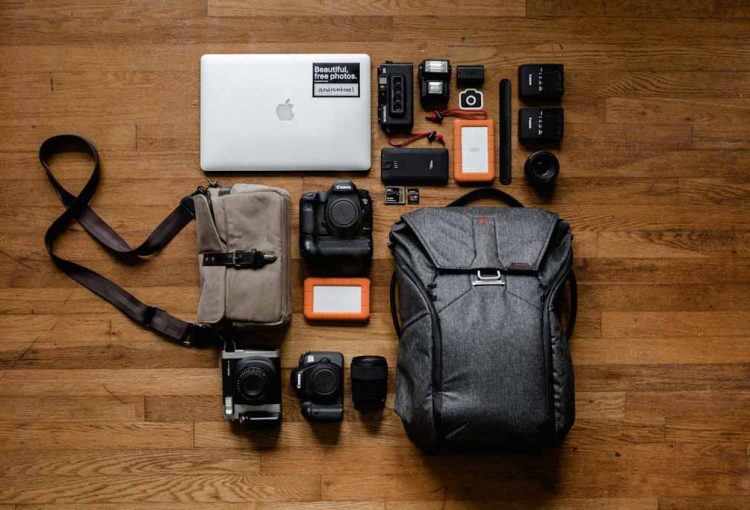
Pack Light: You will have porters or guides assisting, so keeping your gear to a minimum helps. Stick to the essentials: layers, good boots, and a quality rain jacket.
Bring Cash: While your package covers meals and lodging, you will need cash for extras like WiFi, hot showers (which often cost extra in teahouses), charging your electronics, and buying snacks or beer. ATMs are nonexistent on the trail.
Get Insurance: Ensure your travel insurance covers trekking up to 4500m and includes helicopter evacuation. This is non-negotiable for safety in the Himalayas.
Prepare for Stairs: The trail to Chhomrong involves thousands of stone steps. Training on a stair climber or hiking hilly terrain before your trip will be a lifesaver for your legs.
Frequently Asked Questions
Is the Annapurna Base Camp trek arduous?
The trek is considered moderate. You don’t need technical climbing skills, but you do need a good level of cardiovascular fitness. The main challenges are the altitude and the steep stone steps.
Can I trek solo?
As a result of recent regulatory changes in Nepal, solo trekking is banned in many regions, and you are required to have a licensed guide. This package includes a guide to ensure you are compliant with local laws and stay safe on the trail.
What is the accommodation like?
You will stay in “teahouses,” which are simple mountain lodges. Expect a basic twin room with a bed, mattress, and blanket. Toilets are often shared and can be squat-style, though Western toilets are becoming more common in lower altitudes.
Is there WiFi and electricity?
Most teahouses along the route offer WiFi and charging stations for a small fee. However, the connection can be spotty, and electricity may be unreliable in bad weather. It’s good to bring a power bank.
Ready to Conquer the Sanctuary?
The Annapurna Base Camp trek is a journey that stays with you long after the snow has melted from your boots. It’s a reminder of nature’s scale and beauty, accessible even to those on a tight schedule. With this 5-day express itinerary, you don’t have to compromise on the experience—you get the culture, the challenge, and the unforgettable views, all efficiently packaged for your convenience.
If the mountains are calling, don’t let time be the excuse that stops you.